The short answer
You are waiting outside a winter market, your fingers are losing the argument with the wind, and a friend offers a disposable hand warmer. Another person says heated gloves are the only real answer. Both suggestions can make sense, but they solve different problems. Before adding heat, ask whether your hands are losing heat because the glove is thin, wet or loose—or whether you need a source of heat during a long, mostly stationary wait.
A passive glove reduces heat loss. An air-activated warmer adds concentrated heat according to its own package instructions. A heated glove adds a powered system that needs its own battery, controls, care and operating limits. Choose the smallest intervention that matches the activity, and never use added heat as permission to ignore numbness, abnormal color, pain or a worsening weather plan.
Three different ways to help cold hands
The word “warm” hides three different jobs. A glove can slow heat loss without creating heat. A warmer can create a temporary, concentrated heat source. An electrically heated glove can distribute heat through built-in elements, but it adds a device to manage. The distinctions matter most when you stop moving, when the glove gets damp, or when there is not enough room for your fingers to move normally.
| Option | What it is for | What you still have to check |
|---|---|---|
| Passive winter glove | Reduce heat loss while you walk, commute or handle ordinary tasks | Dryness, fit, wind and weather protection; insulation alone does not create heat. |
| Air-activated hand warmer | Add a portable heat source for a specific outing or a long wait | The exact package, placement, space and warnings. Different products are not interchangeable. |
| Heated glove | Use a powered garment when sustained extra heat is part of the plan | Battery state, controls, care, charging and the maker's limits. It is equipment, not medical treatment. |
This is also why a graphene label is not a shortcut to “heated.” The University of Manchester research record describes electrically controlled graphene textile devices. A glove with graphene-fiber fleece but no power source is a passive textile construction, not an electrically heated system. For a fuller explanation of what a material label can and cannot show, see how graphene gloves work.
If you use a hand warmer, let the package set the rules
HotHands describes its warmers as air-activated: ingredients react when exposed to air, and the manufacturer says different products can vary in size, heat and duration. That variation is the reason to read the package in your hand, not rely on a generic memory of what another warmer did last winter. The HotHands Questions/FAQs on the live homepage also warn that some people, including young children, older adults and people with reduced sensation, may not feel heat normally.
- Check the exact product and intended body location before opening it. A hand warmer, toe warmer and body warmer are not automatically designed for the same placement.
- Follow the package directions for whether it belongs in a pocket, between layers or in a supplied pouch. Do not improvise a tight, direct-skin setup.
- Leave enough room for circulation and finger movement. If a warmer forces the glove tight, the added heat is not fixing the fit problem.
- Inspect comfort during the outing, remove the warmer if it feels too hot or trapped against one spot, and keep it away from sleeping use, unattended children and anyone with reduced heat sensation unless the instructions and appropriate professional advice say otherwise.
A warmer can make a well-fitting glove more useful during a static activity, but it does not make a damp glove dry, repair a leaking cuff or turn a light liner into a storm glove. If the source of cold is wetness or wind, correct that first.
What a heated glove adds to the daily decision
A heated glove can make sense for long, mostly stationary exposure such as watching a game, working a fixed post or waiting for transport. The useful feature is its powered system, not a promise that every model feels the same. Read the maker's instructions for charging, controls, battery storage, washing and low-battery behavior. Plan for failure with a charged spare or a route indoors, and make sure you can operate the controls and remove the glove safely. For a short active walk, a dry, well-fitting passive glove may be simpler and less bulky.
Do not use an electric glove or warmer to push through warning signs. Added heat can change what you feel without changing the exposure around the rest of your body, and it cannot diagnose why your hands react strongly to cold. If recurring cold hands, color changes or pain are a pattern rather than a one-off weather problem, talk with a qualified health professional instead of treating the product as a solution.
When cold hands are a stop signal
Cold discomfort is a reason to adjust early: move to shelter, dry your hands, loosen anything restrictive, add a layer or shorten the outing. The CDC guidance on preventing frostbite lists numbness, white or grayish-yellow skin and skin that feels unusually firm or waxy as warning signs. It also lists confusion, slurred speech and fumbling hands among hypothermia signs.
Chilblains are another reason not to turn a purchase guide into self-diagnosis. The NHS chilblains guidance describes cold-related skin changes and says to seek advice when symptoms persist or recur. A warmer may be part of an instructed routine for some person or product, but it is not treatment by default.
Build the passive baseline before adding heat
Start with the basics that make every option work better: hands dry, fingers able to move, cuff closed against the sleeve, and a plan for what happens if the weather turns. Check the winter gloves that help when hands stay cold article for the wider fit, wind and activity checklist. If your priority is keeping fingers together while waiting, compare gloves and mittens for everyday winter tasks before you reach for a device.
- Wear the glove for five minutes indoors and make a fist, pinch a zipper and hold your phone. Pressure, empty fingertips and restricted movement are signs to fix the fit first.
- At the door, check whether the glove is dry and whether the cuff will stay covered when you reach, carry or hold a rail.
- For an active outing, start with the simplest glove that manages the conditions. For a long wait, decide where the warmer will sit, how you will monitor it and when you will go indoors before leaving home.
Where Aerynx X3 fits—and where it does not
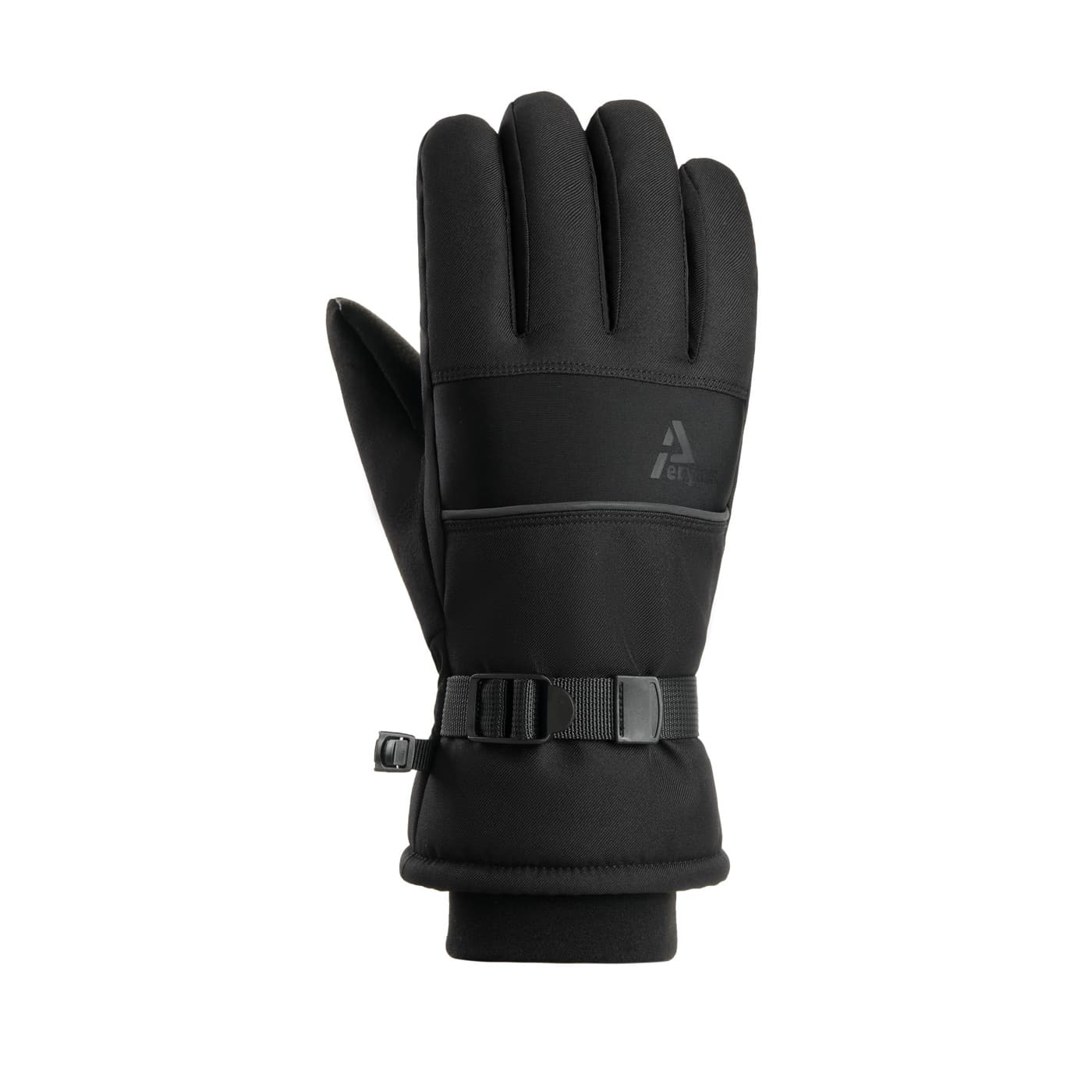
The Aerynx X3 Winter belongs in the passive-glove column, not the heated-glove column. Its design uses six layers—a nylon shell, membrane, synthetic insulation, separate waterproof insert, inner insulation and short-pile fleece—along with a long cuff and wrist adjuster. Those are construction details intended to reduce heat loss and manage winter use; they do not mean the glove generates heat or replaces a hand warmer when you need an added source.
Choose it when your checklist points to a structured everyday winter glove with a padded microfiber PU synthetic-leather palm, pre-curved fingers, a thumb wipe panel and touchscreen coverage on all ten fingers. It has no published numerical temperature rating and is not made for soaking; water can still enter at seams or the cuff. If your real need is powered heat for long stationary exposure, compare that category separately and follow its own instructions. If your hands are numb or changing color, stop the exposure and seek appropriate care rather than buying a warmer to continue.
Hand warmer and heated glove questions
Choosing added heat
- Does graphene fiber make a glove a heated glove?
- No. A graphene-fiber fleece lining is a passive textile feature unless the specific product has a powered heating system. Material presence alone does not prove heat generation, reflected body heat or a particular warmth result.
- Can I put a hand warmer directly against my skin?
- Do not assume that is safe. Follow the exact package instructions; HotHands says its warmers should not be applied directly to skin because some people have reduced heat sensation. Remove it if it becomes too hot and do not use it as medical treatment.
- Can I keep walking if my fingers are numb?
- No. Numbness, unusual pale or grayish-yellow color, waxy or firm skin, confusion or worsening coordination are reasons to end the exposure, get warm and seek medical care as appropriate. Do not rub or aggressively heat numb skin.