The short answer
You leave home in a good coat, walk ten minutes to the train, and your chest feels fine. Your fingertips don't. They ache inside gloves that felt perfectly warm in the hallway, and by the time you reach the platform you are flexing them in your pockets.
A warm body does not guarantee warm hands. When you are cold, your body protects its core first and sends less blood to the fingers, so your hands are often the first place you notice a gap in your clothing. On top of that, a glove loses warmth in four ordinary ways: wind moving through it, dampness inside it, pressure that squeezes the fingers or wrist, and cold things you hold. Check those four before you buy a thicker pair. Often the fix is an adjustment rather than more insulation, and when it isn't, the checks tell you which kind of glove to look for next.
Why your body can feel warm while your hands stay cold
Hands sit at the far end of your arms and do little work while you walk. When your body senses cold, it narrows the blood vessels that supply the extremities and redirects blood toward the core to keep vital organs warm, as Northwestern Medicine explains in its note on cold, stiff fingers. Your torso can therefore feel comfortable while your fingers receive less warm blood. The warmth you feel in your chest is a report on your chest, not on your hands.
That is also why your core layers matter for your fingers. REI's advice on keeping hands warm makes the same point from the other side: a warm core leaves your body better able to warm your fingers and toes. If you are slightly chilled overall, even a good glove has less heat to hold on to.
A glove does not make heat. It slows the loss of the heat your hand brings into it, and it does that job poorly in four situations:
- Wind. Moving air carries warmth out through knit and fleece fabrics. CCOHS guidance on working in cold environments notes that at any temperature you feel colder as wind speed increases.
- Damp. Sweat or melted snow in the lining matters more than most people expect. CCOHS describes the insulation value of wet clothing next to the body as decreasing dramatically.
- Pressure. REI lists too-tight gloves, snug shirt cuffs and watch bands among the things that can restrict circulation, and CCOHS notes that an outer layer that is too small compresses the insulation beneath it.
- Contact. Holding something cold draws heat out of your palm and fingers directly: a metal railing, a bike bar, a phone, a shovel handle or a cold drink. CCOHS recommends insulating metal handles for work below freezing for this reason.
Four checks before you buy thicker gloves
Run through these on your next cold walk or commute. Each takes less than a minute, and each points to a different fix.
| Check | Typical sign | How to check | What to change |
|---|---|---|---|
| Is the lining damp? | Hands start warm, then chill, especially after you slow down or stop | Indoors, turn the cuff back and touch the lining with dry fingers; compare it with a glove you have not worn | Start in dry gloves, ease the pace or open your jacket earlier, and carry a dry spare for the trip home |
| Is air getting through? | Backs of the fingers and knuckles go cold first, worse when facing the wind or moving faster | With the glove on, blow on the back of your hand from close range; if you feel your breath on the skin, wind will reach it too | A glove with a wind-blocking layer, or a windproof shell over the pair you already own |
| Is anything squeezing? | Fingertips go cold first; the cuff or a watch band leaves a mark on the skin | Make a tight fist, then spread your fingers; look for pulling across the knuckles, fingertips pressed into the ends or a cuff that digs in | Loosen the watch strap or sleeve cuff, drop the liner, or try the next size up |
| What are you holding, and for how long? | The palm and the fingers that grip something cold chill fastest; long waits make it worse | Notice what your hand rests on during the outing: a railing, handlebar, phone, leash, shovel or cold cup | Hold padded or non-metal parts, switch hands, keep the phone in a pocket and move your fingers during stops |
If none of the four explains it, and your hands are cold even when the gloves are dry, sheltered from wind and comfortably loose, the answer may simply be that you need more insulation for the way you use your hands, especially if you spend a lot of time standing still. That is a different choice, and it is covered below.
Build a warm start before you go out
The minute before you leave shapes the first half hour outside. These habits help whichever gloves you own:
- Put your gloves on indoors, over warm, dry hands. A glove can only hold the heat your hand brings into it. Skip the radiator or heater as a pre-warmer; direct high heat is hard on stretch fabrics and finishes, which is why our glove care guide keeps gloves away from it.
- Warm your core first. Add the extra layer, hat or neck gaiter before you reach for a thicker glove.
- Close the wrist gap so no skin shows between cuff and sleeve when you reach forward. Our guide to pairing glove cuffs with jacket sleeves covers which should go over which.
- Loosen what squeezes: a tight watch strap, a snug sleeve cuff, or a liner that makes the outer glove tight.
- Pack a dry spare if you will sweat and then wait, for example a brisk walk followed by a cold platform or a school pickup.
- Name the cold. Next time your hands get cold, note whether it was dry cold, wind cold, after-sweat cold or standing-still cold, and change one thing at a time.
Thicker, windproof or just dry? Match the fix to the symptom
Different cold-hand patterns call for different changes. The thickest glove in the shop can solve one of them and make another worse.
- Cold mainly when facing the wind or moving fast: block the wind before you add bulk. The effect is stronger on a bike, which is why cold hands on winter bike rides get a guide of their own.
- Fine at first, then cold after you stop: that pattern usually points to moisture. Wear a lighter glove while you work hard and change into a dry pair when you stop; our guide to sweaty hands in running gloves walks through the timing.
- Fingertips cold inside a snug glove: fix the fit before the fabric. See whether winter gloves should be tight or loose.
- Cold from the start, even when dry and still: you probably need more insulation. Northwestern Medicine recommends mittens in cold weather, and if you need your fingers free, gloves vs mittens for everyday winter lays out the trade-offs.
To line these patterns up with the forecast, our guide to choosing gloves by temperature is a quick starting point.
When cold hands mean stop, not adjust
Ordinary cold hands feel cold, a little stiff and clumsy, and recover once you are indoors and warm. Some signs are different, and no change of gloves should keep you out longer when they appear.
- Stop and get somewhere warm if you notice numbness, pain, or skin that looks white or grayish-yellow or feels unusually firm or waxy. These are among the warning signs in the CDC's frostbite guidance. Remove wet gloves, rewarm with warm (not hot) water or body heat, don't rub the skin, avoid heating pads, radiators and fires, and seek medical care.
- Treat confusion, fumbling hands, slurred speech or unusual drowsiness as an emergency. The CDC lists these among the warning signs of hypothermia and advises seeking medical attention; get emergency help rather than waiting it out.
- If your fingers repeatedly turn white or pale and then red, with numbness, pins and needles or pain, in cold that others shrug off or when you are stressed, mention it to a doctor. The NHS page on Raynaud's describes this pattern and advises seeing a GP when symptoms are bad, getting worse or affecting daily life.
Turning your checks into a glove choice
Once you know which check failed, the brief for your next glove is clear. If wind and cold contact were the problem on walks and commutes around 32–50°F (0–10°C), look for a wind-blocking layer, a cuff long enough to overlap your sleeve and a palm that grips without you squeezing hard. If damp was the problem, a lighter glove plus a dry spare may help more than any single pair. And if you mostly stand still in real cold, mittens or a more heavily insulated glove are the honest answer.
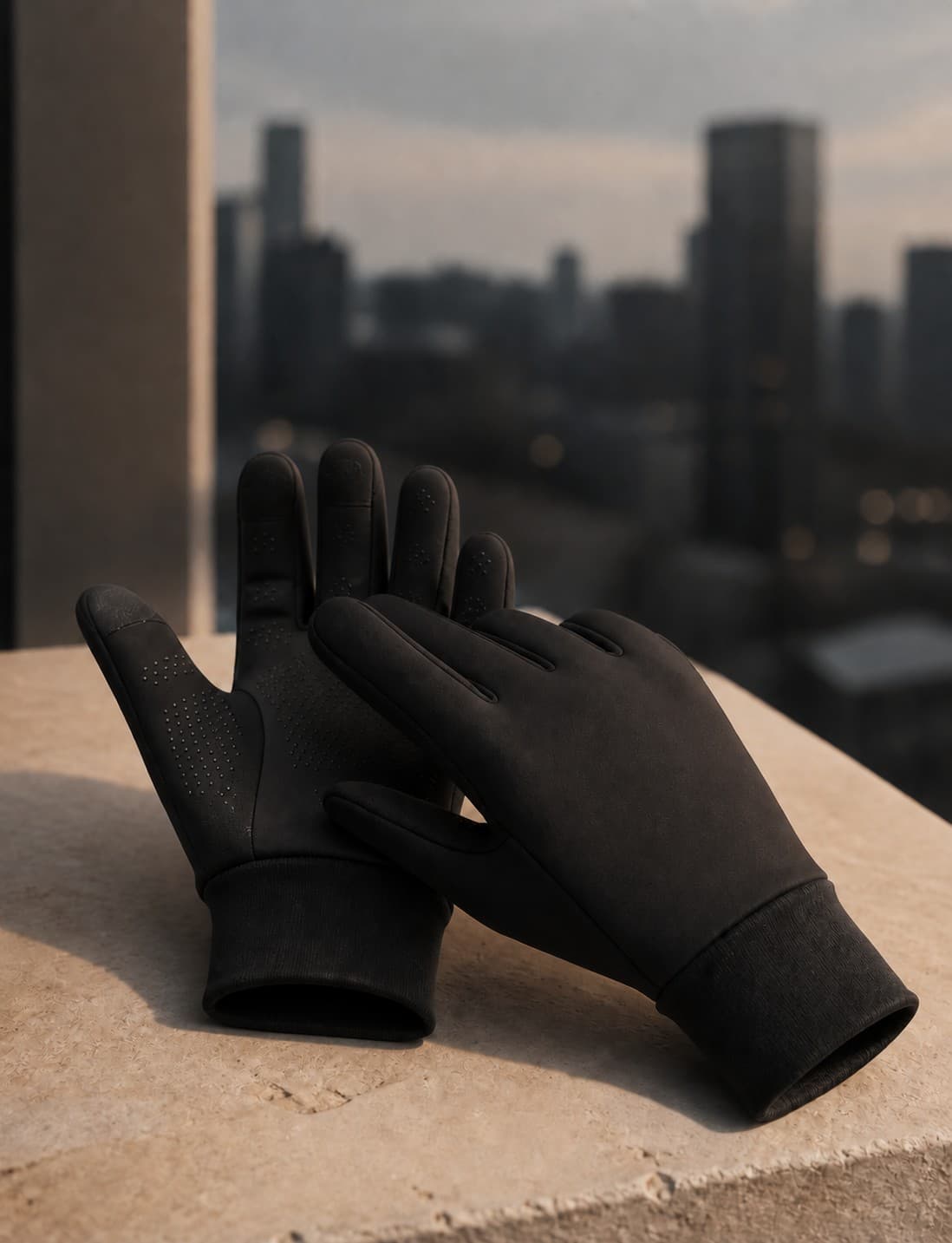
Our Aerynx X2 Daily is built for that first case. The 2026 version has three layers, a waterproof soft-touch shell, a wind-blocking mid-layer and a graphene-fiber fleece lining, with an extended cuff, a silicone palm grip and three touchscreen fingertips so you can answer a message without taking it off. Our use guidance for wearing it on its own is 32–50°F (0–10°C) during everyday activity. That is a starting point, not a safety rating; wind, wet, time outside and your own circulation will all move it. It is built for wet-weather wear, not for soaking or submersion, and water can still find a way in at seams and the cuff.
If your cold hands turned out to be sweaty hands on mild, dry days, the lighter Aerynx X1 Lite may suit you better: four-way stretch, 320 gsm fleece and a water-repellent (not waterproof) finish, with use guidance of 41–59°F (5–15°C) for solo wear. Whichever you choose, check the fit with a closed fist and use the glove sizing guide before you order.
Questions about cold hands in gloves
Cold hands in gloves: quick answers
- Why do my hands get colder the longer I wear gloves?
- Usually because something changes over time: the lining gets damp from sweat, you slow down or stop, or you hold something cold. Check the inside of the glove first. If it is damp, start drier next time and carry a spare; if it is dry, look at wind, fit and what you are gripping.
- Are tighter gloves warmer?
- Not usually. A glove that squeezes the fingers or wrist can restrict circulation and compress its own insulation. Aim for a close fit that still lets you make a full fist without pulling across the knuckles or pressing the fingertips into the ends.
- My fingers turned white on a walk. Should I keep going?
- No. Head somewhere warm and rewarm gently. White or grayish skin, numbness, or pain are warning signs, and repeated color changes in the fingers are worth discussing with a doctor.
- Do I need warmer gloves or a warmer jacket?
- Check both. If your torso is even slightly chilled, your body sends less warmth to your hands, so an extra core layer can help your fingers. If your core is warm and your hands are still cold, look at the glove: wind, damp, fit and grip.