The short answer
A typical winter Saturday: you walk the dog, stop for coffee, then stand at the edge of a sledding hill for an hour. At the hill, mittens are what you want. On the walk, you need fingers that can clip a leash, open a poop bag, and find your keys. The same person, on the same day, needs two different things from their hands.
The short answer to gloves vs mittens for winter: if you mostly stand, walk, or hold large things and rarely need individual fingers, mittens usually keep your hands warmer. If you often handle small things, such as zippers, keys, a phone, camera controls, or brake levers, five-finger gloves are more practical. Split-finger mitts, often called lobster mitts, sit in between. The best way to choose is to list the tasks your hands must do, then pick the least bulky option that still keeps you warm enough while doing them.
Start with what your hands have to do
Shape matters less than the job. Before you compare products, write down the three or four things you will do with your hands on a typical outing, and how often. Most everyday tasks fall into four groups:
- Holding: a leash handle, shopping bags, a shovel, trekking poles, a stroller. Mittens and gloves can both do this.
- Pinching: zipper pulls, keys, clips, a poop bag, a coin. This is where mittens struggle most.
- Fingertip work: a phone screen, camera buttons, a small dial. You need a separate fingertip, and ideally a touchscreen one.
- Controls you must operate safely: bike brakes and gear shifters. Here the handwear has to work every time, not most of the time.
Then ask two questions. How often does each task happen: once an outing or every few minutes? And could you do it by taking one hand out of a mitten for a few seconds? If the fiddly tasks are rare and quick, mittens remain a strong choice. If they are constant, gloves will save you a lot of pulling on and off.
Why mittens usually keep hands warmer
In a mitten, your fingers sit together in one compartment and share warmth. REI's guide to choosing gloves and mittens puts it plainly: mittens are warmer than gloves made with the same materials, because the fingers can share warmth, and they have fewer seams. The Canadian Paediatric Society's winter safety advice recommends mittens over gloves for children for the same reason: fingers can bunch together for warmth.
Note the phrase "the same materials." A thin knit mitten will not beat a well-insulated, windproof glove. Warmth also depends on fit, dryness, wind, how active you are, and how long you stand still. So treat the rule as a starting point: at equal quality and thickness, the mitten is usually warmer.
Where five-finger gloves earn their place
Gloves win on independent finger movement. REI describes gloves as offering more dexterity, grip, and separate finger movement, and lists activities where you handle gear, including winter photography. For cycling, Cycling UK's cold-weather clothing advice recommends full-finger gloves, preferably with silicone grip sections, for secure contact with the bike's controls. Whatever you wear on a bike, test it on your own brake levers before riding in traffic.
Gloves have limits too. The warmer a glove gets, the more insulation it carries, and the bulkier and stiffer it tends to be. Fit matters more than people expect: fingers that are too long leave empty tips, and a flat-cut glove can fight you when you grip. Our guide to pre-curved glove fingers explains how finger shape affects everyday grip.
Lobster mitts vs. three-finger touchscreen gloves
The phrase "three-finger gloves" causes real confusion, because it describes two unrelated things.
- Lobster or split-finger mitts are a shape. REI describes them as a blend of glove and mitten; a common version separates the thumb and index finger while keeping the other three fingers together for warmth. They suit people who find gloves too cold and mittens too clumsy.
- Three-finger touchscreen gloves are ordinary five-finger gloves with conductive thumb, index, and middle fingertips so you can use a phone. The shape is a normal glove. Our touchscreen glove troubleshooting guide explains how that works.
- Convertible mittens are a third option: a fold-back panel turns the mitten into a fingerless glove for quick tasks.
When you shop, check the product photos. A lobster mitt has two or three finger compartments; a three-finger touchscreen glove has five.
Choose by task: a quick matrix
Use this as a starting point, then adjust for how cold you run and how long you stay out.
| Situation | Main hand tasks | Usually the better fit | Watch out for |
|---|---|---|---|
| Watching sledding, games, or events | Few tasks, long still periods | Mittens, or a thin glove under a mitten | Pulling a bare hand out for the phone; keep it quick |
| Walking the dog | Holding the leash, bags, treats | Gloves or lobster mitts; mittens for short, calm walks | Never wrap the leash around fingers or wrist |
| City commuting | Phone, keys, cards, handrails | Gloves with touchscreen fingertips | Long waits at stops can outlast a thin glove |
| Winter cycling | Brakes and gear shifters | Full-finger gloves, or lobster mitts that let you brake safely | Test on your own bike before riding |
| Kids' snow play | Building, sledding, holding a rope | Mittens for warmth; gloves for older kids who need grip | Bring a dry spare pair; use mitten clips, not strings |
| Winter photography or birding | Buttons, dials, focus, phone | Thin gloves, alone or under mittens | Hands cool fast during long waits |
Notice how often the answer is a combination. REI points out that gloves can be layered under a mitten, which lets you slip the mitten off for a task while your fingers stay covered. Our guide on how to layer gloves covers how to make two pairs work together without cramping your fingers.
Mittens or gloves for kids?
For young children, the pediatric advice points to mittens for warmth, with clips rather than strings to keep them attached. Older kids who need to grip a sled rope, pack snowballs, or handle a zipper on their own may be happier in gloves. Either way, have your child try them on and practice putting them on without help, since handwear that is a struggle to pull on tends to end up in a pocket. Our guide to winter gloves for school goes further on independence and sizing.
If your day calls for gloves: what to look for
Aerynx does not make mittens. If the matrix above points you to mittens, a good pair from a brand that makes them is the right call. If it points to gloves, look for finger length that matches yours, a palm that grips without bunching, touchscreen fingertips if you use your phone outside, and a cuff that seals against your sleeve.
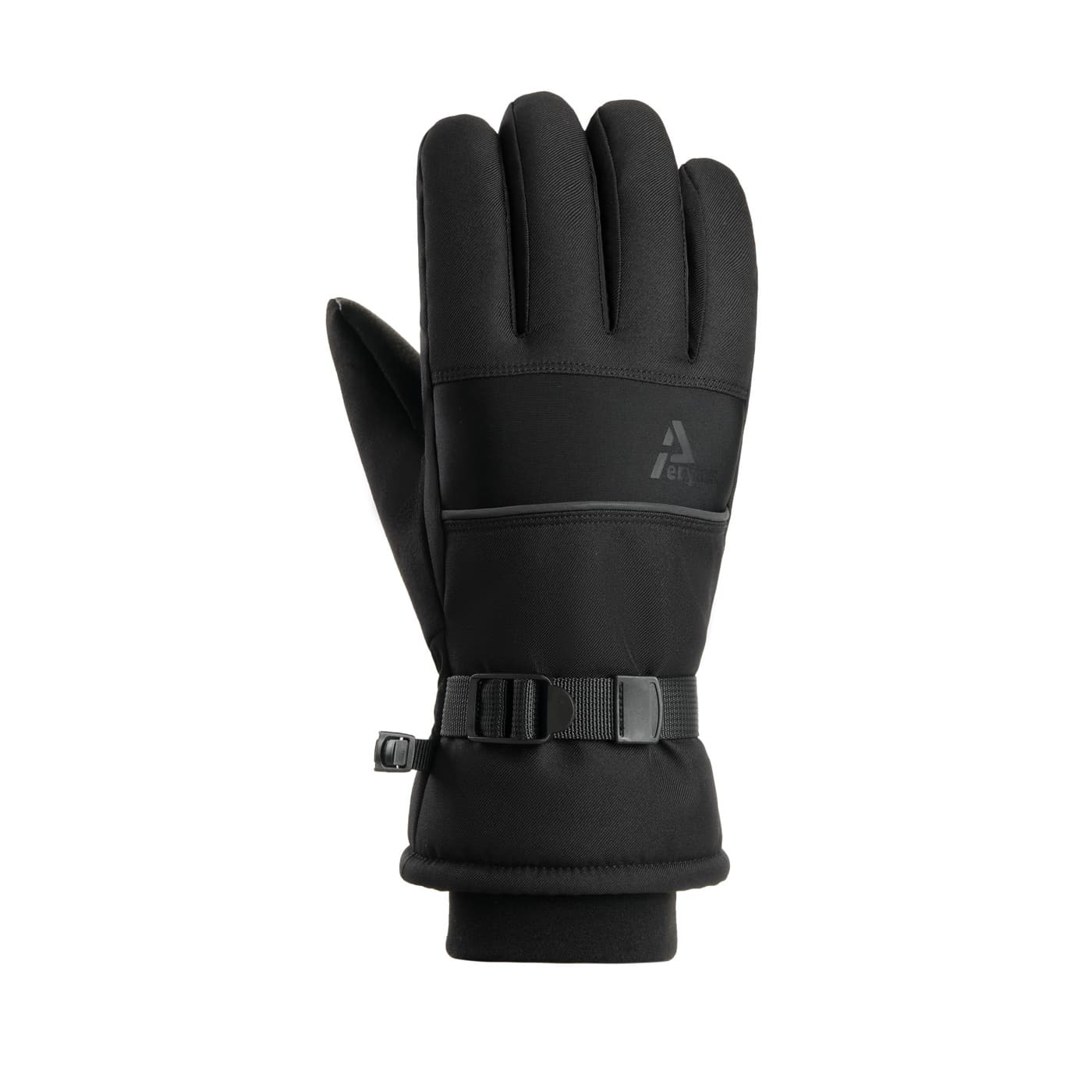
For adults who need independent fingers in real winter weather, the Aerynx X3 Winter is built around that job: pre-curved fingers shaped toward a natural grip, a padded microfiber PU synthetic-leather palm, touchscreen fingertips on all ten fingers, and a six-layer construction. A detachable wrist leash and a pairing clip help when you pull a glove off for a quick task. Its limits: there is no published temperature rating, the palm is synthetic rather than genuine leather, it is not made for soaking, and it is an everyday winter glove rather than a certified ski or work glove. For kids who want five fingers, the Aerynx X0 Kids has a three-finger touchscreen, silicone dot grip, a long cuff, and a pairing clip. There is no age chart, so measure your child's hand and check the size guidance on the product page, and remember it is not made for soaking either.
Questions about gloves and mittens
Gloves vs mittens
- Are mittens always warmer than gloves?
- Not always. With the same materials, mittens are usually warmer because fingers share warmth. A thin mitten can still be colder than a well-insulated glove, and anything wet gets cold fast.
- Are three-finger touchscreen gloves the same as lobster gloves?
- No. Lobster gloves are a split-mitten shape with fingers grouped together. Three-finger touchscreen gloves are five-finger gloves with conductive thumb, index, and middle fingertips.
- Should kids wear mittens or gloves?
- Pediatric advice favors mittens for warmth, especially for younger children. Older kids who need to grip or handle small things may prefer gloves. Let your child try both and practice putting them on alone.