The short answer
You are comparing winter gloves for a rainy commute or a child's snow days. One tag says PFAS-free. Another says PFC-free DWR. A third says no PFAS intentionally added. They sound interchangeable. They are not.
A PFAS claim describes a chemistry choice, and each wording covers a different share of the product. Check three things: which parts it covers (only the water-repellent finish, or the whole glove), what kind of statement it is (a materials policy, or a lab test against a stated limit), and which chemicals it names (the whole PFAS class, or one or two). None of it tells you how well the glove keeps rain out; that is a separate check.
Why rain and snow gear used PFAS in the first place
PFAS, short for per- and polyfluoroalkyl substances, are not one chemical. The EPA's PFAS explainer describes thousands of them, many long-lasting because they break down very slowly. Outdoor brands used fluorinated chemistry because it works: it helps fabric shed both water and oil. Patagonia's account of moving away from PFAS notes that brands used these finishes on most synthetic products, and on the membrane in some waterproof gear.
In a glove, the likeliest places are the DWR finish on the outer fabric and, in waterproof designs, the barrier layer. Coatings and trims are where a narrow claim can leave gaps, and Patagonia notes that the industry is still learning where PFAS can turn up across apparel components and manufacturing.
What the concern is, in plain terms
The EPA's summary of what is currently understood about PFAS risks centers on persistence: many PFAS break down very slowly and can build up in people, animals and the environment over time. It lists several exposure routes, including drinking water, food, dust, air, certain workplaces and products made with PFAS, and says exposure to certain PFAS may be linked to harmful health effects. It is also clear that research is ongoing and that most studies focus on a limited number of the better-known compounds.
For clothing, much of the concern is about the whole life of the product: how the chemistry is made and handled in factories, and where it ends up after disposal. Patagonia's explainer places the main problem for apparel at manufacturing and end of life rather than in wearing the garment. So preferring a PFAS-free glove is a reasonable materials choice, not an emergency, and not a reason to throw out gloves that still work.
How to read PFAS-free, fluorine-free and no-intentionally-added claims
| Wording you see | What it usually covers | What to ask | What it does not tell you |
|---|---|---|---|
| PFAS-free | Varies: sometimes the whole product, sometimes only the finish | Which parts, and is it a policy or a test result? | Whether anything was measured, or to what limit |
| No intentionally added PFAS | The maker did not add PFAS to the covered parts to achieve a function | Does it cover the whole glove or only the fabric? | That no trace would show up under every test method |
| PFC-free or fluorine-free DWR | The water-repellent finish on the outer fabric | What about the waterproof layer, coatings and trims? | Anything about the rest of the glove |
| PFOA-free or PFOS-free | One or two specific, older PFAS | Does the policy exclude the whole class? | Whether other PFAS were used instead |
| Lab test or third-party standard | Named substances, measured to a stated limit, on the samples tested | Which method, which parts, which batch? | Substances outside the test list |
Two words do a lot of work here. Intentionally added is about what the maker chose to put in: a materials and supply-chain commitment. Patagonia defines its own version as not adding fluorinated chemistries to achieve a specific function or technical feature. A test result is about what was measured, and it is only as broad as its method, its substance list and the samples tested. Both are useful. Neither is a guarantee of zero.
Recycled-content labels answer a different question again. A glove can be PFAS-free and not recycled, or the reverse; we cover those claims in what GRS and recycled claims on gloves mean.
Why PFOA-free alone is not enough
PFOA is one PFAS in a class of thousands. A product can drop PFOA and still use a related compound. Patagonia describes doing exactly that: moving from long-chain C8 chemistry to shorter-chain C6, then learning from newer studies that C6 was no easier on the environment, a switch it calls a regrettable substitution. The logic only runs one way. A product made without intentionally added PFAS is also made without intentionally added PFOA, but PFOA-free says nothing about the rest of the class.
Does PFAS-free mean less rain protection?
Not necessarily, but it changes the trade-offs. Finishes made without PFAS can still repel water, yet Patagonia notes they resist oil less than fluorinated ones, so grime and skin oils matter more. A glove's rain protection also comes mostly from its construction: the barrier, the seams and the cuff. We cover the performance side in whether PFAS-free gloves keep rain out and the construction basics in waterproof vs water-resistant gloves.
What to check before you buy, and what to do with what you own
- Find the exact wording on the product page or tag, and note whether it says free, intentionally added, or names specific substances.
- Ask which parts it covers: the outer finish, the waterproof layer, coatings, trims, or the whole glove.
- Ask whether it is a policy or a test, and if it is a test, which method and limit. A brand that answers plainly is telling you more than one that repeats a slogan.
- Check weather protection separately. A chemistry label is not a rain rating; read the construction and stated limits such as not for soaking.
- Keep caring for the gloves you already own. Discarding working gear does not undo how it was made.
- If your worry is household exposure rather than one pair of gloves, start with the EPA's list of exposure routes, which covers drinking water, food, dust and air as well as products.
How Aerynx handles it
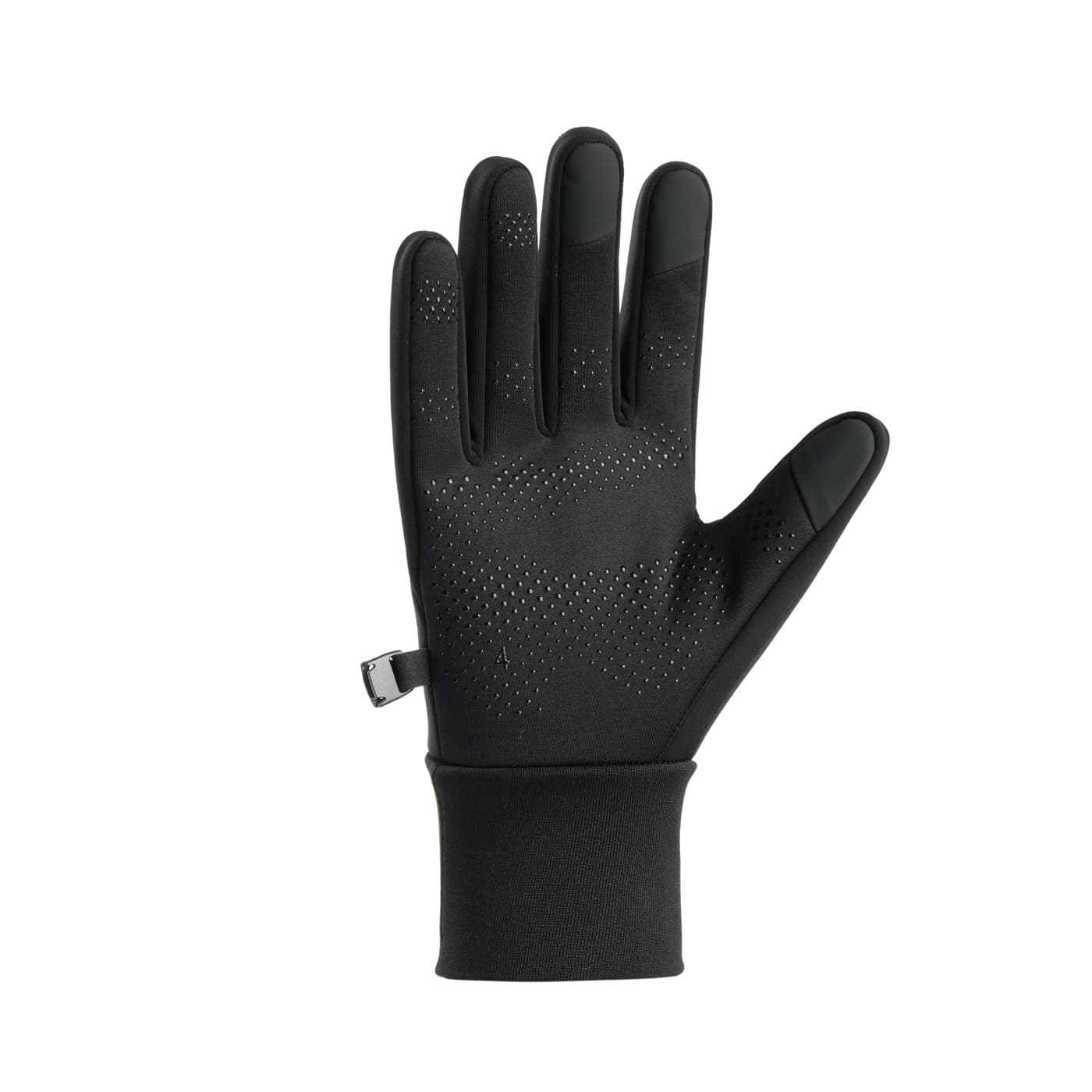
Every current Aerynx glove carries the same brand statement: no PFAS intentionally added to any part of the glove. That covers the whole glove, not only the outer finish. It is our materials and supply-chain commitment, not a lab certificate of zero PFAS, and not a health claim. We are not alone in this; Patagonia and other outdoor brands have moved the same way.
The statement also does not change what each glove is built to do in the wet. If you want a PFAS-conscious glove for rainy commutes, the Aerynx X2 Daily is waterproof by the brand's definition, but built for wet-weather wear rather than soaking or submersion, and water can still find a way in at seams and the cuff. For children's everyday winter wear, the Aerynx X0 Kids pairs a nylon shell and membrane with a graphene-fiber fleece lining; it is not for soaking either, and seams can let water in. Measure your child's hand and check the size guidance on the product page, or contact support, before ordering.
PFAS glove label questions
Common questions
- Does no intentionally added PFAS mean zero PFAS?
- No. It means the maker did not add PFAS to achieve a function. It is not a claim that a lab found none under every test method.
- Is PFOA-free the same as PFAS-free?
- No. PFOA is one substance in a class of thousands, and a PFOA-free product may still use other PFAS.
- Can PFAS-free gloves still be waterproof?
- Yes. Waterproofing comes mostly from the glove's barrier layer and how its seams and cuff are handled, not from the chemistry label. Check construction and stated limits separately.
- Should I throw away my older gloves?
- There is no need to discard gloves that still work. Keep caring for them as the label says and apply your PFAS preference to your next purchase.