The short answer
You are comparing two winter gloves for a rainy commute. One says it is made without intentionally added PFAS; the other says waterproof. It is tempting to treat those labels as competing answers to the same question, but they describe different parts of the decision.
Yes, a glove made without intentionally added PFAS can be designed for rain. The PFAS statement does not, by itself, prove water repellency, oil resistance or waterproof construction. Look for the surface treatment, barrier or membrane, seam and cuff design, intended weather, and care instructions. Patagonia's account of moving finishes and membranes away from intentionally added PFAS is a useful example of the development question, not evidence that every PFAS-related product performs the same way.
PFAS, DWR and waterproofing answer different questions
A buying page can mention all three, but do not let one word fill in the other two. Use this quick map when a label is short on detail.
| Claim | What it describes | What it does not prove |
|---|---|---|
| No intentionally added PFAS | A brand statement about its material or chemistry choices and the scope it says the statement covers. | Not laboratory zero, not a claim that the glove is harmless, and not proof of rain performance. |
| DWR or water-repellent | A surface treatment or finish that helps water bead and run off the face fabric. | Not proof that seams, cuffs or openings will keep water out during sustained exposure. |
| Waterproof construction | A barrier, membrane or assembled structure intended to keep liquid water from passing through the glove body. | Not an unlimited soaking guarantee; seams, closures and cuffs can remain entry points. |
| Oil resistance | A separate response to oils, sunscreen, food or body oils and the way those contaminants affect a finish. | Not something a water-droplet demonstration can establish. |
The PFAS wording also needs a scope. A careful statement says what parts of a product it covers and whether it means no intentionally added PFAS. That is different from saying a laboratory found no trace of any PFAS. Read how to read a PFAS-free glove label for the chemistry-language side; this article stays with the weather-performance question.
Why a wet-looking outer fabric does not diagnose a leak
DWR sits at the face of a textile. Its job is to make droplets bead and move away instead of soaking quickly into the outer surface. A barrier or membrane is a different layer with a different job. GORE-TEX Professional's DWR explanation says the outer fabric can become saturated and feel cold or clammy even while the membrane still maintains waterproofness.
That gives you a useful observation, not a complete test. If water stops beading, the face fabric may need cleaning, an approved restoration step or a new treatment. It does not automatically mean the barrier is damaged. The reverse is also true: beads on the back of a hand do not show that the cuff or every seam will stay dry when rain runs down your sleeve.
For a glove, check the places your body actually exposes to water: the finger seams, the palm, the wrist opening and the overlap with a jacket sleeve. Use the water-resistant versus waterproof glove guide for the vocabulary, then judge the finished glove rather than one attractive close-up of droplets.
Why water repellency and oil resistance cannot stand in for each other
Rain is not the only liquid a glove meets. Sunscreen, hand cream, food, road grime and body oils can reach the palm and fingers. A surface that makes rain bead is not automatically a surface that resists oil, and an oily mark is not a reliable forecast of how the glove will behave in a shower. Treat each as a separate question for the exact fabric and finish.
This distinction matters because contamination can change how a finish behaves. Patagonia notes that dirt and body oil can affect DWR performance and that a shell may wet out over time. That explanation belongs to Patagonia's products and process, but the practical lesson generalizes: clean the soil according to the maker's care instructions before deciding the weather protection has failed. Do not turn a single greasy fingerprint or a single missed bead into a universal chemistry claim.
Care can change the result, so follow the finished glove's instructions
A DWR finish is not a reason to avoid cleaning a glove forever. Dirt and oils can interfere with the surface, while the wrong detergent, scrubbing or heat can damage a finish, conductive area or assembled structure. Start with the care label for the exact model and keep the product page or support instructions with your purchase notes.
- Remove mud and salt promptly, using the least aggressive method the label allows. Do not grind a brush across touchscreen pads or a grippy palm.
- Ask whether the care instructions cover the whole glove or only a removable component. A treatment intended for a jacket or a different membrane may not suit a glove.
- Let the glove dry fully before judging the surface. A wet outer face can feel clammy even when the inner barrier is intact.
- If the label permits a DWR restoration product, use the named type and method. Do not spray every glove or add heat just because another brand recommends it.
- When the glove still leaks after correct care, change the weather plan or choose a construction intended for that exposure rather than treating a new coating as a guarantee.
The guide to washing touchscreen winter gloves gives a cautious cleaning sequence. Its central rule is the same here: a general material explanation cannot replace the finished product's care label.
Four questions to ask before buying for rain
Use these questions when a listing emphasizes a chemical label but leaves the weather story vague. The answers should describe the same model and the same version you can buy.
| Question | Why it matters | A careful answer looks like |
|---|---|---|
| What exactly does the PFAS statement cover? | The phrase may be a brand declaration with a defined product scope, not a third-party test of zero trace. | A clear statement such as no intentionally added PFAS, with the covered parts named. |
| What is the weather structure? | A finish, a membrane and an assembled waterproof glove solve different exposure problems. | The page names the shell or barrier and describes the intended weather, without hiding seams and cuffs. |
| What happens at the openings? | Water running down a sleeve can enter through a cuff even when the hand panel performs well. | The cuff and sleeve-overlap method are described as limits, not implied away by a droplet photo. |
| How should it be cleaned and restored? | A finish can change with dirt, detergent, abrasion and heat. | The maker gives model-specific cleaning and any approved DWR step. |
How the Aerynx choices fit this decision
Aerynx's X1 Lite is the lighter, stretch-oriented option: it is water-repellent, not waterproof, and its 5–15°C (41–59°F) solo-use range is brand guidance rather than a safety or laboratory rating. The brand also states that no PFAS is intentionally added to any part of the glove. Choose it for lighter exposure or as a layer when you have a suitable shell with enough room.
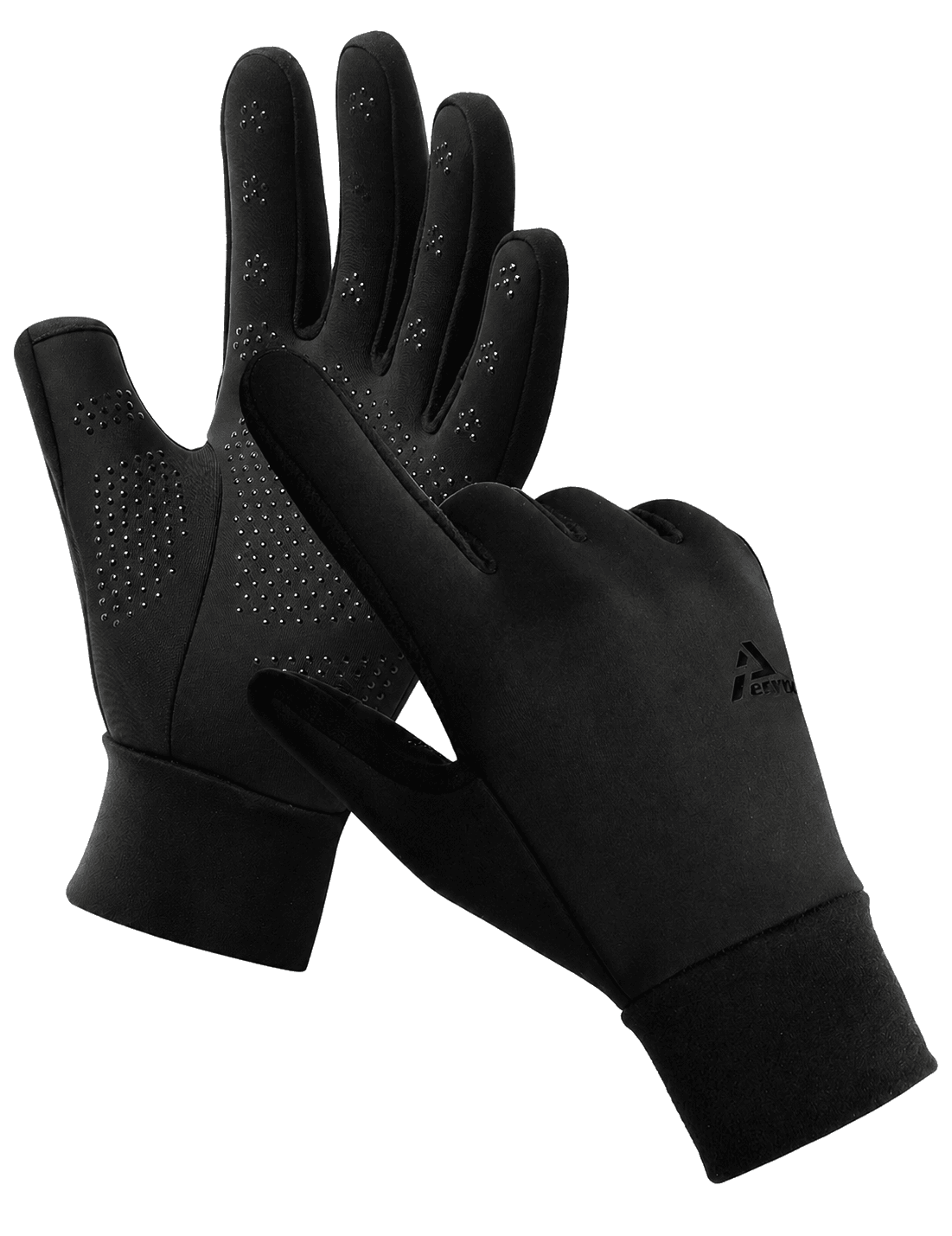
The Aerynx X2 Daily 2026 design is the more relevant choice when wet-weather construction matters. Aerynx describes its waterproof soft-touch shell, wind-blocking middle layer and graphene-fiber fleece lining, along with three-finger touchscreen coverage and an extended cuff. It is intended for wet-weather wear, not soaking or submersion; seams and the cuff can still admit water. The 32–50°F (0–10°C) figure is brand use guidance, not a tested rating. This article describes the 2026 design specifically; we have not treated all Amazon inventory as confirmed 2026 stock.
In both cases, the no-intentionally-added-PFAS statement and the weather description answer different questions. Pick the construction for the rain you expect, follow its care instructions, and keep a dry plan for the conditions the glove is not designed to handle.
PFAS-free DWR and rain: FAQs
PFAS-free DWR and rain
- Does PFAS-free mean a glove is waterproof?
- No. A PFAS statement describes a material or chemistry choice. Waterproof performance depends on the finished construction, including barriers, seams, closures and cuffs. Check the exact product's weather claim and limits.
- If water stops beading, is the waterproof barrier broken?
- Not necessarily. The outer DWR may have weakened while a barrier remains intact, although a glove can also leak at seams or openings. Clean and dry it according to the maker's instructions, then reassess the intended use.
- Can I put every PFAS-free glove in a dryer to restore DWR?
- No. Heat and restoration methods are product-specific. Follow the glove's label; do not transfer a jacket or another brand's dryer instruction to a touchscreen glove with a different construction.