The short answer
You come in from shoveling the walk or a slushy dog walk, drop your gloves in a coat pocket and forget them. By morning the shell feels dry. Then you slide a hand in and the fingertips are cold and clammy.
That is common with insulated gloves, and it is fixable. The outer fabric faces the room and dries first; the lining, insulation and fingertips sit deep inside and dry last. To dry gloves that are still wet inside, take them out of pockets and bags as soon as you are home, press the water out without wringing, open the cuff, hang them wrists-down where the air moves, and keep them off radiators and out of hot air. Judge them by the fingertips, not the shell or the clock. If they are still damp at the door, wear a second pair.
Why a dry shell doesn't mean a dry glove
An insulated winter glove is a stack of layers sewn into a closed pouch. Only the shell meets room air. Beneath it there may be a membrane or waterproof insert, insulation and a fleece or knit lining, and moisture inside has to work out through those layers or escape through the one opening at the cuff. The fingertips are the deepest part of that pouch and the farthest from the cuff, so they are usually the last place to dry. Touching the back of the glove tells you about the shell, not about the fleece against your fingertips.
Where the water came from matters for next time rather than tonight. Snow pushed in at the cuff, water that found a seam during wet play and sweat from a brisk walk all end up in the same place. To work out which it was, why gloves get wet inside in the snow walks through the checks. This article is about getting the glove dry again.
What to do in the first ten minutes at home
Much of the drying time is decided right after you take the gloves off. A glove balled up in a pocket, tote or car footwell sits in its own damp air.
- Take them out right away. Don't leave wet gloves in a pocket, backpack or closed bin, or piled on top of each other.
- Tip out snow and grit. Shake each glove cuff-down so loose snow and dirt leave the hand and finger cavities before they melt into the lining.
- Press, don't wring. Squeeze gently from the fingers toward the wrist, then roll the glove in a dry towel and press, without twisting layers that are stitched together.
- Open the cuff. Loosen any wrist strap or adjuster and spread the cuff so air can reach the hand.
- Hang them wrists-down. GORE-TEX's glove care instructions recommend line drying with the wrists pointing down. With the cuff at the bottom, leftover water can run toward the opening instead of sitting in the fingertips.
- Give them moving air, not heat. A spot in a heated room with some air circulation beats a closet or a cold mudroom. A fan blowing room-temperature air across the cuffs helps; a heater does not.
- Reshape halfway. When the gloves are about half dry, put them on and make a fist, as GORE-TEX suggests, to restore their shape. It is also a quick way to find the damp spots.
Fixed lining or removable liner? Check before you pull
Some gloves are built around a liner that is meant to come out. Hestra's removable-liner range is one example: the brand sells spare liners for drying between uses and swapping during the day, and its care guide notes that gloves with removable linings dry faster with the lining taken out.
Many everyday insulated gloves have a lining stitched to the layers around it instead. Hestra's glove care guide advises that if a glove does not have a removable lining, you should not turn it inside out, because the lining, insulation and membrane may be difficult to restore properly.
- Read the product page or care label first. Removable liners are normally described as removable.
- Look inside the cuff for anything designed to release a liner, such as snaps or hook-and-loop tabs.
- If there is no clear sign, treat the lining as fixed and dry it in place.
Why the radiator is the wrong shortcut
Heat is tempting when gloves have to be ready by morning. GORE-TEX tells owners not to put gloves in the sun or on a heater and not to iron them, and our own glove care guide asks X1 Lite and X2 Daily owners to line dry away from direct heat and skip tumble drying and ironing. Some makers do allow low heat for specific products; GORE-TEX says its shell gloves can be tumble dried on a low setting. That permission belongs to those gloves. The care label on yours decides.
A winter glove can combine a treated shell, a membrane or insert, synthetic insulation, fleece, an elastic cuff and a synthetic-leather or silicone grip, and those materials don't all tolerate heat the same way. A radiator or hair dryer also heats the shell most while the damp fleece inside lags behind, so the glove can look finished long before the fingertips are.
| Shortcut | Why to skip it | Do this instead |
|---|---|---|
| Radiator, heater or fireplace hearth | Concentrated heat on materials you can't inspect; many glove labels say keep away from direct heat | Drying rack in a heated room |
| Hair dryer on hot, pointed into the cuff | The same heat problem, aimed at the lining | A fan on room-temperature air, plus time |
| Tumble dryer | Only if your glove's own label allows it; the X1 Lite and X2 Daily care guidance says no | Line dry, wrists pointing down |
| Turning a fixed lining inside out | Lining, insulation and membrane may not go back properly | Open the cuff and let air in |
How to tell if gloves are dry enough to wear
There is no reliable number of hours. Drying time depends on how much water got in, how the glove is built, and the temperature, humidity and air movement in the room, so an overnight dry works on some nights and not on others. Check the places that dry last instead.
| Check | How | Not ready if |
|---|---|---|
| Fingertips | Put on a dry, bare hand and press each fingertip, including the thumb, into the end of the glove | Any tip feels clammy or stays colder than the rest of the hand |
| Palm and thumb crotch | Squeeze the palm between your thumb and fingers from the outside | The fabric feels cool and damp or leaves your skin moist |
| Cuff and wrist fold | Feel inside the cuff where it folds under a strap | The inner cuff is still damp |
| Weight | Compare the two gloves, or weigh the pair on a kitchen scale once when you know it is dry and use that as your baseline | One glove is noticeably heavier |
| Shape | Put the glove on and make a fist | It feels stiff or twisted; reshape it and give it more time |
Tell cold from damp. A dry lining in a cool room can feel cool for a moment; if that fades within a few seconds, it was temperature. If your fingertips stay clammy, or your skin feels wet when you take the glove off, it is moisture. If a pair isn't ready, don't wear it anyway for a long outing: start with a dry spare and let the damp pair keep drying.
Make dry gloves the default, not a morning surprise
- Rotate two pairs if you are outside every day. Wear one while the other dries; it is the same logic as a spare removable liner, applied to whole gloves.
- Use the same hook or rack every time you come in, and check the fingertips the night before, while there is still time to plan a spare.
- On longer outings, carry a dry pair in its own bag, away from wet gear. Why a spare pair belongs on a short winter hike covers how to pack it.
- Dry isn't the same as clean. If a lining smells sour even when it is dry, wash it the way its label says; see how to wash touchscreen winter gloves.
- Store gloves for the off-season only when they are fully dry, flat, in a cool, dry place.
If your gloves are the Aerynx X3 Winter
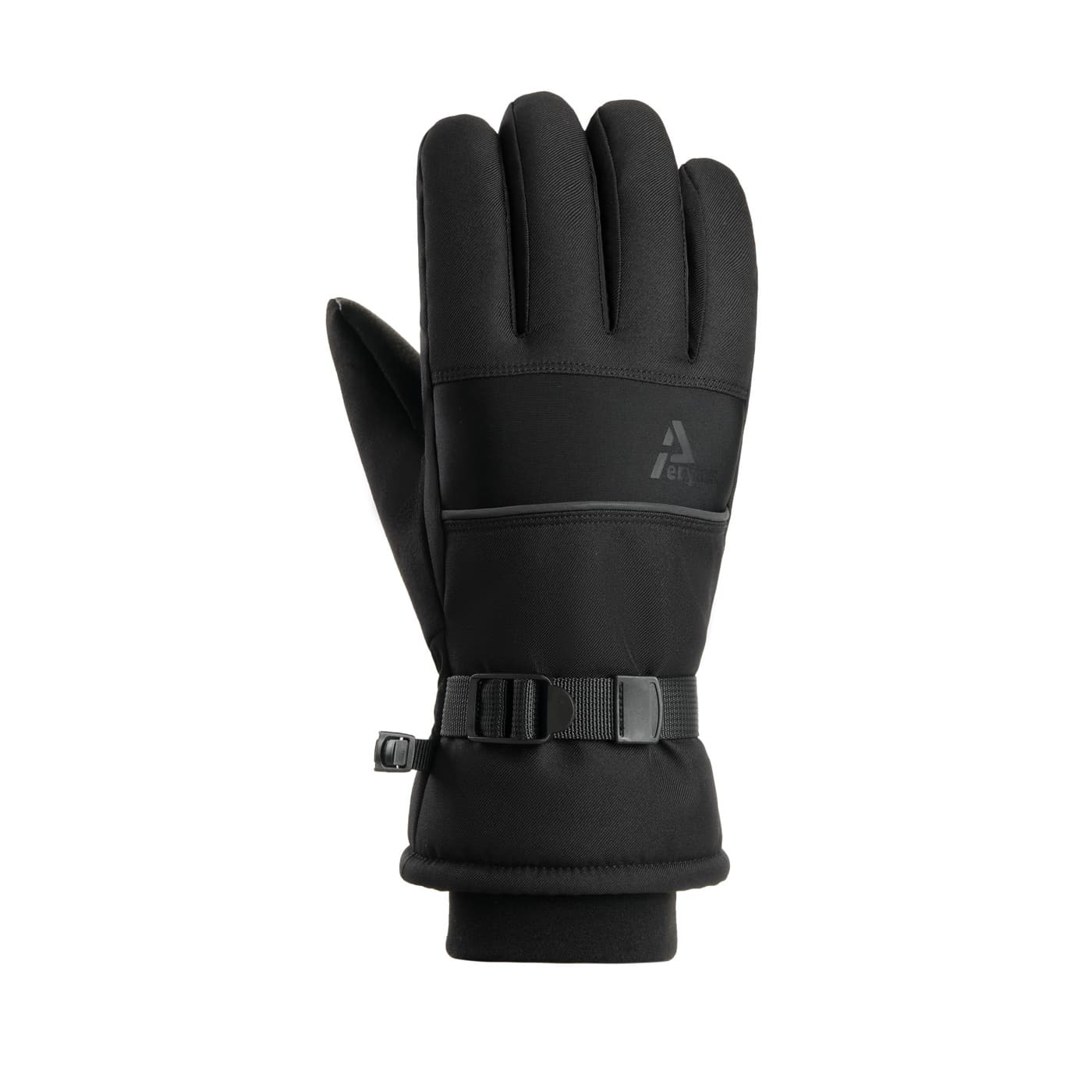
The Aerynx X3 Winter is exactly the kind of glove this article is about. It has a six-layer build (a nylon shell, a membrane, synthetic insulation, a separate waterproof insert, inner insulation and a short-pile fleece lining), and the lining is fixed. Its care note is hand wash only, air dry fully between uses, and do not force the fixed lining inside out.
In practice, loosen the wrist adjuster, open the long cuff, hang the glove wrists-down and check all ten fingertips before the next wear. The X3 is built for wet-weather wear, not for soaking, and water can still get in at seams and the cuff. After a day of packing wet snow, plan for a longer dry or a second pair rather than a hotter drying spot. If your routine needs gloves that turn around quickly between back-to-back outings, a glove with a removable liner, or simply two pairs, may suit you better.
Questions about drying gloves
Drying gloves
- Can I use a hair dryer to dry gloves inside?
- Not on a hot setting pointed into the cuff. Many winter glove labels say to keep gloves away from direct heat, and hot air dries the shell long before the lining. Moving room-temperature air, such as a fan, is the safer way to speed things up.
- Should I turn gloves inside out to dry them faster?
- Only if the lining is designed to come out. If it is fixed, leave it in place; Hestra warns that turning a glove with a non-removable lining inside out can leave the lining, insulation and membrane hard to restore.
- The outside is dry but the inside smells. Can I still wear them?
- Check the fingertips first; if any are damp, the gloves are not ready. If they are dry but smell sour, the lining needs cleaning rather than more drying, so wash them the way the care label says.