The short answer
You leave for a familiar park loop that should take less than an hour. Halfway around, one glove is damp from brushing snow off a bench, the other is wet inside from a sweaty climb, or a glove disappears while you stop to take a photo. The route is short, but your margin for a dry, comfortable return can shrink quickly.
Pack one dry spare pair when the forecast is wet, shelter is limited, the route may take longer than it looks, or a cold stop is part of the plan. Keep it sealed and separate from the gloves you are wearing. A backup replaces wet or missing gear; it does not make an unsafe route or cold-weather warning safe to continue through. National Park Service winter hiking guidance recommends extra dry clothing and turning around as conditions change.
Why a short walk can still create a glove problem
Short outings often get less planning. You may skip a pack because the trail is close, assume the weather will hold, or leave gloves loose in a coat pocket. That is fine until moisture, a pause and a longer return arrive together. Wet fabric feels colder, a pause removes the heat built while walking, and losing one glove creates an uneven pair.
A spare is useful when it solves a defined failure: a damp liner, a snowball fight or a glove that falls from a pocket. It cannot compensate for poor footwear, a closed route, worsening visibility or a forecast beyond your plan. The NPS winter-ready checklist puts the larger decision first: check access, weather, daylight and route before deciding what to carry.
- Dampness: snow, rain, sweat or a wet object has reached the inside or the palm.
- Loss: one glove is missing and the remaining glove is not a useful substitute for both hands.
- Stops: photography, snacks, map checks or conversation will leave you standing still in the wind.
- Time: the loop, trail condition or slower footing means the return will take longer than the sign suggests.
A five-minute departure check
The right spare depends on the route, not on a universal definition of a winter day hike. Run this check before you leave and make the route decision before the gloves become the urgent part of the trip.
| Check | What to ask | Action |
|---|---|---|
| Forecast | Will rain, wet snow, strong wind or a rapid temperature change reach the route? | Pack a sealed spare; change the plan if an alert makes the outing inappropriate. |
| Access | Is the trail open, and are ice, snow or construction changing the route? | Check the park or land manager notice instead of relying on last summer's walk. |
| Daylight | Will the return happen with enough light for the actual pace and footing? | Set a turnback time before starting, not when you are already cold. |
| Stops | Will you photograph, eat, navigate or wait for someone? | Carry the spare where you can reach it without emptying the pack. |
The table is a light-outdoor decision aid, not a mountaineering safety list. On snow or ice, add the equipment and navigation skills the route actually requires. A short distance does not erase a closed trail, thin ice, poor visibility or a difficult return.
Choose a spare for replacement, then keep it dry
The best spare is not automatically the thickest glove. It is the pair that fits, can be put on with cold hands and covers the failure you expect. For a mild damp walk, a dry everyday glove may be enough; for wet snow or long exposed sections, choose more weather protection. In steady rain, evaluate the glove and spare as weather gear rather than assuming two light pairs equal one shell.
- Put the spare in a waterproof bag. A zip bag works for a simple walk; a dry bag helps when the pack may sit in wet snow.
- Keep it away from a damp hat, wet shell or used towel. A sealed backup only works if the rest of the pack cannot soak it.
- Pack the pair together, not as loose objects. A pairing clip or fixed pocket reduces the chance of losing the spare.
- Carry it near the top or in an accessible pocket. If reaching it requires unpacking in rain, you will wait too long to change.
- At home, open the bag, separate the gloves and dry both pairs completely. How to dry winter gloves inside covers the outside-dry, inside-damp problem in more detail.
Do not put wet gloves beside the dry pair. Seal the used gloves separately or carry an empty bag so the backup stays usable.
Use the backup before the problem becomes urgent
Set a simple check point: a bench, trail junction, viewpoint or halfway mark. At that point, notice whether the glove lining feels damp, whether the cuff is letting snow in, and whether you can move your fingers normally. If the glove is wet, change while you are still in a sheltered place rather than waiting until your hands are cold and the weather is worse.
Manage the stop as part of the route: get out of the wind, open the dry bag only when changing, and store the used pair separately. Keep the gloves together during photos, map checks or eating. The winter photography hand-warming guide explains why a stationary pause deserves its own plan.
When to turn back instead of changing gloves
A spare solves a glove problem. It does not solve a route problem. Turn around when the trail becomes harder to follow, footing is beyond your equipment or skill, daylight is running short, or weather and visibility are deteriorating. The NPS says winter routes can look different from summer and that you should be willing to turn around when conditions change. NWS cold-weather alert guidance likewise treats an extreme cold warning as a reason to avoid going outside, not a challenge for a better pair of gloves.
Treat your hands as a stop signal too. If fingers become numb, painful, or unusually pale or gray, leave the cold and protect them rather than trying to walk farther. The CDC frostbite guidance says to get out of the cold for pain or redness and lists numbness and abnormal skin color as warning signs; suspected frostbite or hypothermia needs medical attention.
Choose the main glove for the route you actually have
For a mild loop, prioritize a close fit, easy phone use and a spare that stays dry. For a wetter route, prioritize the glove's stated construction and limits, then carry the backup as resilience rather than proof that the glove is impervious.
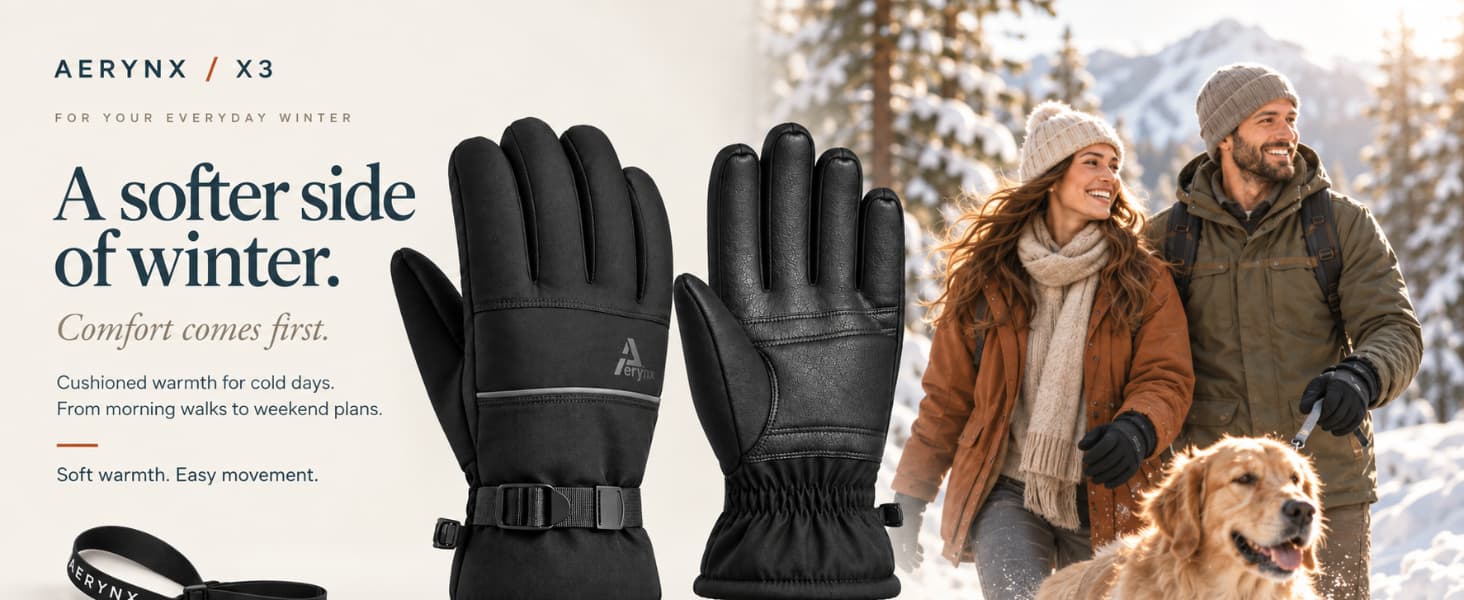
The Aerynx X2 Daily 2026 design fits when wet-weather protection is central: its waterproof soft-touch shell, wind-blocking middle layer, graphene-fiber fleece lining, three-finger touchscreen and extended cuff are all part of the stated build. It is for wet-weather wear, not soaking or submersion; seams and cuff can still admit water. If a longer, more structured winter glove suits the route, the Aerynx X3 Winter has six layers, a long cuff, wrist adjustment, detachable wrist leash and pairing clip. X3 has no published temperature rating and is not for soaking.
Either can be the main glove for an appropriate day hike, but neither replaces route planning or a dry backup when the consequences of wet gear are high. If your existing gloves fit and the forecast is benign, use them and carry the spare you already own.
Spare gloves for a winter day hike: FAQs
Spare gloves for a winter day hike
- Do I need spare gloves for a one-hour park walk?
- Not always. For a nearby, open route with stable weather and easy shelter, you may be comfortable without them. Pack a dry pair when wet snow, wind, longer stops, limited shelter or a difficult return would make one damp glove a serious problem.
- Can I put wet gloves back in the same bag as the dry spare?
- No. Isolate the wet pair in a separate bag so moisture cannot reach the backup. At home, open both pairs and let them dry fully before storing them together.
- Does carrying a spare mean I can stay out longer in bad weather?
- No. A spare is for replacing wet, lost or poorly matched gear. It does not change a cold-weather warning, a closed trail, unsafe footing, poor visibility or cold-injury warning signs. Reassess and turn back when the route or your hands tell you to.