The short answer
You are leaving for work with a phone in one pocket, a coffee in the other hand, and a forecast that could mean wind on the platform or wet snow on the walk home. The tempting question is, “Which winter glove is warmest?” The useful question is, “Which three jobs will this glove repeat, and what will the weather ask it to handle?”
To choose winter gloves, write down your three most common outdoor tasks, the longest time you normally stay out, and whether wind or wet weather is part of the route. Then choose the lightest category that can do those jobs with the fit and protection you need. One pair can be enough when your activities and weather are consistent. A liner, a weather-resistant daily glove and a modular or insulated system solve different problems; a single label cannot make them interchangeable.
Start with tasks, not the material name
A glove for a brisk walk has a different brief from a glove for standing at a winter market. Moving hands create one set of demands; waiting still in wind creates another. Phone taps, a leash, a bike handlebar and a wet jacket sleeve also change what counts as a good fit. This is why a thin glove is not automatically inadequate and a thick glove is not automatically right.
- Name the three tasks you actually repeat: for example, hold a transit rail, unlock a phone and carry a bag.
- Write the conditions beside them: dry or wet, sheltered or windy, moving or standing, and the longest usual stretch outside.
- Separate must-haves from nice-to-haves. Touchscreen fingertips may be essential for a bus pass, while a clip may only be useful on a hike.
- Test your current pair before shopping, then decide whether you need one repeatable setup or two situations covered. A light glove for active mornings and a more protective pair for wet waits may be more practical than forcing one pair to do both.
Keep fit separate from warmth. Fingers that cannot reach the ends, a bunched palm or an exposed wrist can make a promising glove frustrating. Use the glove sizing guide first.
A quick category check
Use this as a first pass, not a ranking. The right row is the one that covers your repeated job without adding bulk you will resent every time you use your hands.
| Category | A reasonable use case | Trade-off to check |
|---|---|---|
| Thin liner | Running, a cool commute, or a close-fitting layer under a shell | Less weather protection and less insulation than a dedicated outer glove; some liners still support touchscreens. |
| Daily weather glove | Mixed errands, phone use and walks where wind or light wet weather matters | More coverage can mean more bulk. Confirm the cuff, fingertip placement and care instructions. |
| Modular or insulated system | Longer cold exposure, changing conditions, or a plan to adjust layers | More pieces and more fit decisions. A system only helps if you will carry, store and operate all of it. |
Thin liners deserve a fair comparison. The Smartwool Liner Glove SW011555 lists touchscreen thumb and index fingers, and the Outdoor Research Vigor Lightweight Sensor Glove 300560 lists touchscreen compatibility and a silicone print grip. They may still be the wrong choice for a wet, motionless wait, but “thin” does not mean “cannot do useful tasks.” The separate glove liner guide explains where that category stops helping.
What six public specifications can—and cannot—tell you
The table below is a feature comparison checked against the listed brand pages and Aerynx design facts on September 28, 2026. It is not a lab test, a price comparison or a claim that one brand performs better. “Not listed” means this comparison did not find that detail; it does not prove the product lacks it.
| Model | Useful listed features | Boundary for this comparison |
|---|---|---|
| Smartwool Liner SW011555 | Lightweight knit; touchscreen thumb and index finger | The checked page does not provide a whole-glove waterproof claim or a shared temperature scale. |
| OR Vigor Lightweight Sensor 300560 | Lightweight stretch glove; touchscreen; silicone print grip | The listed features describe a moderate-weather or active-use category, not a cross-brand warmth result. |
| OR Arete Modular GORE-TEX 322162 | Waterproof outer glove; removable touchscreen fleece liner; clip and leash features | This is a modular system. Its construction cannot be used to rank a single-layer glove. |
| Aerynx X1 Lite | 320 gsm fleece; three-finger touchscreen; silicone palm grip; water-repellent finish | Water-repellent is not waterproof. Its 41–59°F (5–15°C) solo-use guidance is brand guidance, not a safety rating. |
| Aerynx X2 Daily, 2026 design | Waterproof soft-touch shell; wind-blocking middle layer; graphene-fiber fleece lining; three-finger touchscreen | Built for wet-weather wear, not soaking or submersion. Seams and cuff can admit water; 32–50°F (0–10°C) is brand use guidance. |
| Aerynx X3 Winter | Six layers; pre-curved fingers; padded microfiber PU synthetic-leather palm; ten-finger touchscreen | No published numerical temperature rating. The palm is synthetic, and the glove is not for soaking. |
Run the tasks before you buy
A product page can list touchscreen compatibility or a waterproof description, but it cannot tell you whether your hand reaches the fingertip with your phone in use or whether the cuff works with your coat. Bring the tasks to the fitting instead of making an open-hand judgment.
- Put on both gloves and relax your hands. Check that every fingertip reaches its pocket without excess fabric folding over the tips.
- Open and close a phone, zipper and key ring. A glove that passes a single tap may still fail a small pinch.
- Hold a cup or bag handle for a minute. Look for palm bunching, slipping or a cuff that pulls when the wrist bends.
- Put on the actual jacket, move your arms and test the cuff over or under the sleeve. Repeat the phone test with your clean screen, case and protector; touchscreen claims are not a guarantee for every setup.
- If one must-have task fails, check finger length before sizing up. Choose another cut, category or two-pair plan if it still fails.
When one pair is enough—and when it is not
One pair is sensible when your pace, time outside and weather are consistent, or when your current pair already covers the gap. Add another when the category changes: a thin running glove may fail during a stationary wait, while a padded waterproof system may be unnecessary for a quick dry walk. Do not create a rotation just because a table has many rows. Fix fit, dryness and layering first, leaving room for normal finger movement.
Finding the Aerynx match at the end of the checklist
The Aerynx choice should follow the same screen. Choose the Aerynx X1 Lite for a 320 gsm fleece glove with three-finger touchscreen coverage, silicone palm grip and water repellency for lighter everyday use or layering. It is not waterproof, and 41–59°F (5–15°C) solo use is brand guidance, not a safety limit.
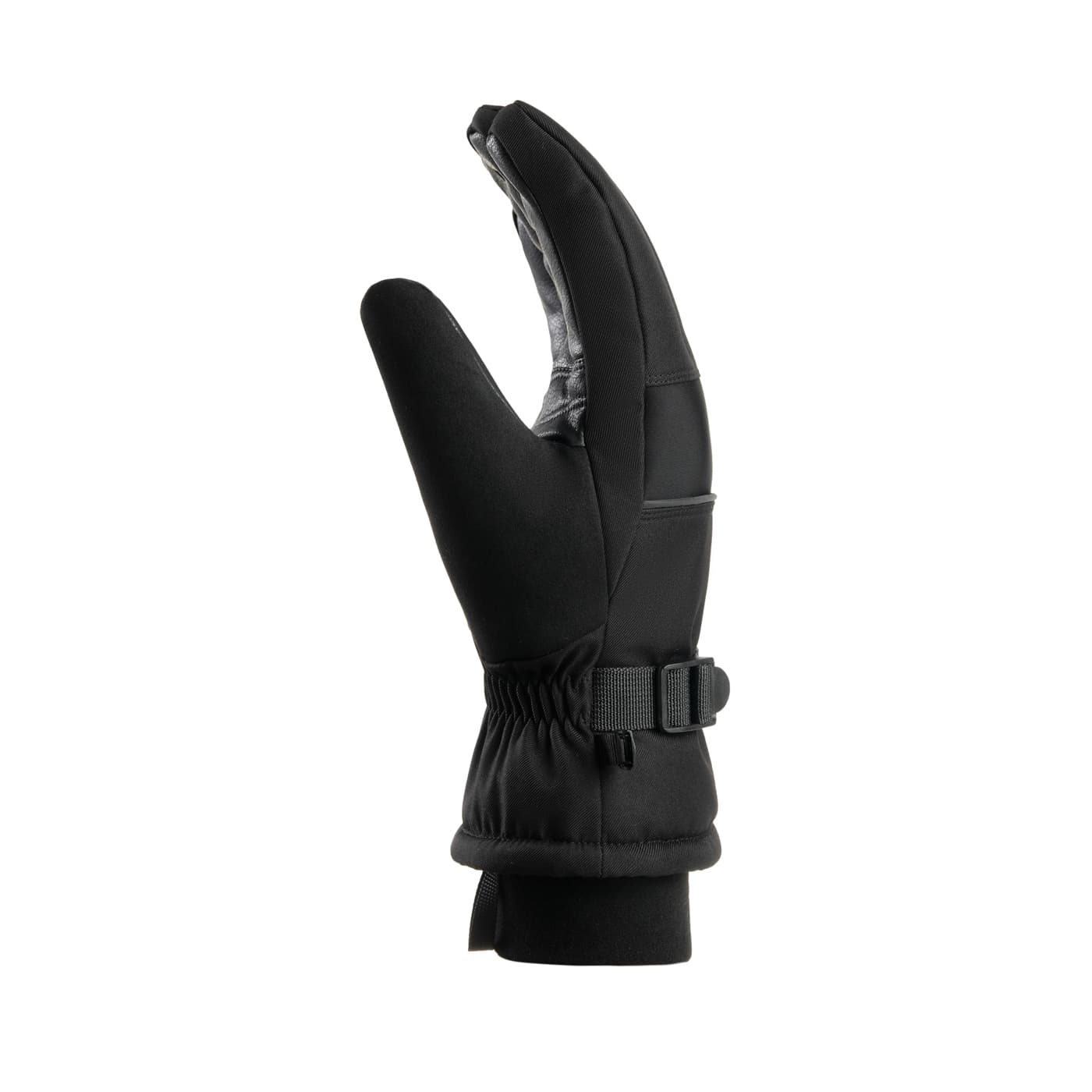
If wind and wet weather are central, the Aerynx X2 Daily 2026 design brings a waterproof soft-touch shell, wind-blocking middle layer, graphene-fiber fleece lining, three-finger touchscreen and extended cuff. Confirm the current page version before ordering. It is for wet-weather wear, not soaking or submersion; seams or the cuff can admit water, and graphene fiber alone does not establish extra warmth or heat generation. For a more structured option, the Aerynx X3 Winter uses six layers, pre-curved fingers, a padded microfiber PU synthetic-leather palm and ten-finger touchscreen coverage. It has no numerical temperature rating, is not genuine leather and is not for soaking. If a mitten or active heated system fits your checklist better, choose that honestly.
Winter glove buying questions
Winter glove buying checklist
- Are inexpensive liner gloves automatically a bad choice?
- No. A liner can suit active use, a mild commute or a layer under a shell, and official liner pages list touchscreen features. Check fit, weather protection and task instead of assuming price or thickness predicts the result.
- Do I need two pairs of winter gloves?
- Not necessarily. Start with the pair you own and actual conditions. Add a second only when one glove cannot cover two jobs, such as a dry active walk and a wet stationary wait, or when a dry backup matters.
- If a product page does not say waterproof, does that prove the glove is not waterproof?
- It proves only that you should not treat waterproofing as a confirmed feature in your comparison. Look for a specific construction statement and check seams, openings and care instructions. Do not turn an omitted claim into a ranking or a guarantee.