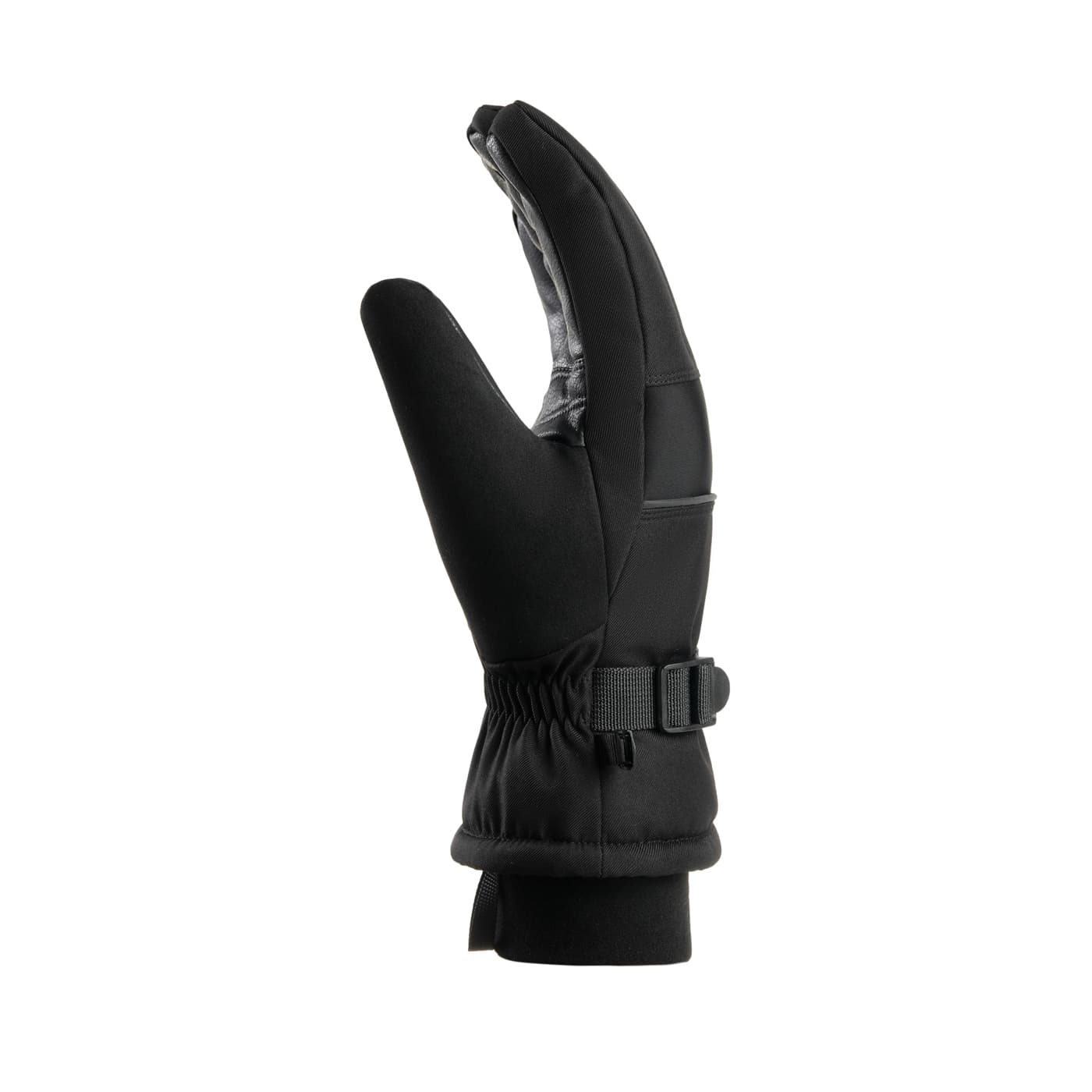
The short answer: close, aligned and pressure-free
You order winter gloves that look sleek in the product photo. The first time you grip a bike handle, the fingertips pull back; when you pick up your keys, the palm feels tight. A loose glove is just as awkward: empty fingertips twist when you try to use a phone.
Winter gloves should be close enough that the fingers stay aligned with the glove, but not so tight that the hand feels squeezed or the material is under constant pressure. They should also leave the space your activity requires: a liner under a shell needs more room than a glove worn alone. Use three checks with your real jacket and your real objects—grip, pinch and wrist bend—then make the choice based on what your hand can do, not on a vague rule that gloves must be tight or loose.
| Check | Likely fits | Too tight or too loose |
|---|---|---|
| Fingers | Tips stay seated and you can open the hand. | Pressure at the ends, folded tips or a long empty pocket. |
| Palm | Material follows the hand without hard folds. | Stretching across the palm or excess fabric bunching. |
| Grip | You hold a handle without extra squeezing. | The glove fights the grip or slips around the hand. |
| Wrist | Cuff stays covered and comfortable under your jacket. | A tight band, moving cuff or exposed skin. |
Tight is not the same as snug
A snug glove follows the hand. A tight glove presses on it. The difference may be invisible while your hand is open and obvious as soon as you curl your fingers. Watch for persistent pressure at the fingertips, a stretched feeling over the knuckles, difficulty spreading the hand or a cuff that leaves an uncomfortable mark. Those are fit signals, not a break-in ritual you need to endure.
A little air and movement can be useful, especially in an insulated glove or a system with a liner. Hestra's size and fit guidance notes that sport gloves should have a small gap between hand and material and that a sport glove that is too tight may feel cold because insulation is reduced. Do not turn that into a universal finger-spacing measurement: hand shape and the product's pattern still matter.
Too much room is not a harmless upgrade either. Long finger pockets make it harder to place a fingertip on a screen or key, while extra palm fabric can twist under a handle. The right answer is not always the smaller size; it may be a different cut, a different finger length or a mitten when separate-finger control is not necessary.
Measure hand circumference, then check the finger length
Before ordering, measure the larger hand and follow the exact product instructions. A common starting point is the circumference around the palm just below the knuckles, excluding the thumb. Hestra's measuring guide describes that method and tells shoppers to compare it with each product's own size chart. Some brands also ask for hand length, from the wrist crease to the middle-finger tip.
- Measure with the hand relaxed, not clenched, and use the chart's units.
- Use the larger hand if the two measurements differ. A glove that fits one hand and presses the other will not feel balanced.
- If you plan to wear a liner, measure and select the outer glove with that layer on, or choose a shell whose instructions allow the added volume.
- Do not borrow an adult chart for a child, or assume that a size label means the same thing across brands and models.
The measurement narrows the choice; it does not replace movement. The glove sizing guide is a useful starting point, but your final test should happen with the glove on your hand and the tasks you actually perform.
Use grip, pinch and wrist checks
Do the three checks in order, with your winter jacket on, using both hands.
- Grip: hold a mug, bottle, bike handle or leash. Close the hand naturally and notice whether the palm folds into your grip or the finger backs pull. You should not need to squeeze harder just to keep the glove from moving.
- Pinch: pick up a key, card or zipper pull. Check whether the thumb and index finger meet where you expect, whether the fingertip slides away from the object and whether the material hides the task. Repeat with a phone if the product claims touchscreen use.
- Wrist: bend the hand up and down, then reach forward as if opening a door or pushing a stroller. The cuff should stay covered by the sleeve without cutting into the wrist or leaving a cold gap.
- Open: spread your fingers and then relax them. You should be able to open the hand without fighting the glove. If the fingers stay bent because the material is pulling, try another size or pattern.
- Repeat: put on any planned liner and run the same tests again. The fit that passed alone may fail once the layers share the palm and finger channels; how to layer gloves covers that handoff in more detail.
A small PubMed-indexed case study found that ready-to-wear sports gloves changed hand performance and that comfort and ease of hand motion declined with wear time in its sample. It does not tell you which size to buy, but it supports testing a glove over time and during representative tasks rather than judging it from a mirror check alone.
Know when fit is the problem and change the plan
If your fingers become numb, painful or unusually pale while you are outside, stop and warm up instead of trying to solve the feeling with a tighter glove. A product can be the wrong size, but a persistent symptom can have other causes and is not something to diagnose from a shopping page. If symptoms continue after warming, seek appropriate medical advice.
If the glove is comfortable at rest but fails when you add a jacket or liner, the system is too crowded. Remove the extra layer, change the order or choose an outer glove with more usable space. If a glove is loose because the fingers are too long, sizing down may help; if the palm then feels tight, look for a different shape rather than forcing one dimension to solve every problem.
For cold, low-dexterity tasks, a mitten can be a more sensible solution than stacking several gloves. For keys, phones and handles, a well-aligned five-finger or split-finger design may be worth the trade-off. The goal is a hand that stays functional and comfortable for the whole activity.
How the fit question applies to Aerynx X1 Lite and the 2026 X2 Daily
The Aerynx X1 Lite is the more flexible candidate when you want a close everyday glove or an inner layer: it uses four-way stretch, 320 gsm fleece, a silicone palm grip, an extended stretch cuff and touchscreen thumb, index and middle fingertips. It is water-repellent, not waterproof, and its 41–59°F (5–15°C) solo-use range is brand guidance rather than a tested rating. Try it with the shell you own before deciding that its stretch will solve a crowded fit.
If you are considering the 2026 Aerynx X2 Daily, its waterproof soft-touch shell, wind-blocking middle layer, graphene-fiber fleece lining, three-finger touchscreen and extended cuff all affect fit. Brand guidance is 32–50°F (0–10°C) for solo wear, not a tested rating; the design is for wet-weather wear, not soaking or submersion, and seams or the cuff can still admit water. Check the listing details for the 2026 design rather than assuming an inventory date.
Questions about winter glove fit
Winter glove fit
- How much space should be at the fingertips?
- There is no single spacing that fits every hand and glove. Your fingertips should reach the ends without pressure, folded fabric or a long empty pocket, and you should be able to open and close the hand normally.
- Should a stretchy glove be bought smaller?
- Do not size down just because the fabric stretches. Measure first, then check whether the fingertips, palm and cuff stay aligned without pressure. Stretch can accommodate movement, but it cannot correct the wrong finger length.
- Is numbness normal while a new glove breaks in?
- No. Remove the glove, warm up and reassess the size, cuff and conditions. Persistent pain, numbness or unusual color needs appropriate medical attention rather than a tighter fit.
- Do I need a larger glove to wear a liner underneath?
- You need a combination with usable space, not automatically a larger label. Put the liner and shell on together and repeat the grip, pinch and wrist checks before relying on them outside.