How to layer gloves: start with the task, not the thickness
You leave a warm apartment in a thin pair, add a bulky outer glove at the windy platform, and discover that your fingers can no longer find the zipper pull. A few minutes later the inner glove is damp, the outer glove is hard to remove, and the extra layer has not made the setup feel warmer.
The workable answer is to layer gloves only when the two pieces still act like a system: the inner layer sits smoothly against your hand, the outer layer has room without sliding around, and the combined cuff works with your jacket. Put both pairs on before you go outside, then test a grip, a pinch and a phone task. More material is not automatically more useful. If the combination compresses your fingers or traps sweat, switch layers or use a different glove category instead.
Give each layer a job
A liner is the layer closest to your skin. It can add a little insulation, make a bare-hand phone stop less abrupt and provide a close surface for small movements. Some thin liners support touchscreens, but that is a model-specific feature rather than a property of every liner. The glove liner guide explains when that kind of light layer is useful on its own or under something warmer.
The outer glove is the weather and abrasion layer. It may block more wind, shed or stop more precipitation, and give you a palm designed for a particular grip. A purpose-built modular product can have a removable liner, as Outdoor Research's Arete Modular specifications show, but a sewn-in lining is not automatically removable. Treat your own pair as one piece unless its instructions say otherwise.
| Question | A useful result | Change the plan when |
|---|---|---|
| What is the inner glove doing? | It gives skin contact, light insulation or quick-task coverage. | It adds bulk without helping a task you actually do. |
| What is the shell doing? | It handles the wind, wet or rough contact the liner cannot. | It compresses the liner or leaves the wrist exposed. |
| Can the hand still work? | You can grip, pinch, bend and release without extra force. | Your fingers bunch, slide or lose their tips. |
| Can moisture leave? | You can open or remove a layer before sweat builds up. | The inner glove is already damp and you keep adding insulation. |
Check the combined fit, not the label on either pair
Two medium gloves from different brands do not create a guaranteed medium combination. Finger length, palm width, cuff height and seam placement all change the way one glove slides inside another. The Hestra size and fit guide is a useful reminder to measure the hand and use the specific product chart; do not use a nominal size as proof that two gloves will nest.
- Put on the inner glove and smooth each finger into its channel. Do not leave a fingertip folded over before adding the shell.
- Add the outer glove, then open and close your hand. The inner fingertips should stay seated rather than retreating into the palm.
- Hold a mug, bottle or bag handle for a few seconds. Look for palm folds, pressure across the finger backs or a grip that requires more squeezing than usual.
- Pinch a key, zipper pull or card. If the two layers turn a small task into a struggle, the setup is too bulky for that task even if it feels warm.
- Bend your wrist while wearing the jacket you will actually use. The two cuffs should overlap without forming a hard ridge or pulling the inner glove out.
- Open the shell carefully. If the liner follows it out, stop pulling at the fingertips and reassess the cuff, moisture and friction before trying again.
Fit affects more than comfort. A small PubMed-indexed study of two ready-to-wear sports gloves found changes in hand performance and comfort with glove use, but its 30-person sample and glove types do not predict your winter setup. Use the result as a reason to test the actual tasks you perform, not as a score for one construction.
Match the layer to the task you are doing
A layered system does not have to stay in the same configuration for the whole outing. On a walk to the station, keep the shell on. At the ticket machine, take off only the shell if the liner can handle the short job. For a long phone session, move to a warmer, drier place rather than standing still with both gloves off in the wind.
| Task | First move | What to watch |
|---|---|---|
| Walking in wind or light precipitation | Keep the shell on and keep the cuff covered by your jacket setup. | Snow or rain entering at the opening can defeat a good outer fabric. |
| Phone, key or zipper | Try the liner if its fingertips are designed for touch or fine control; otherwise remove the shell in a sheltered spot. | Wet fingertips, screen films and poor fit can still affect a touchscreen. |
| Carrying a bag or leash | Test both layers together before starting, then keep the layer with the more useful palm grip outside. | Bunching can change how hard you squeeze. |
| Resting after active movement | Open or remove the outer layer before sweat accumulates. | A damp inner layer will feel colder when you stop. |
Cold-weather guidance from CCOHS recommends multiple layers that can be adjusted as activity and weather change, and warns that compressing inner layers reduces their insulating value. That is the practical mechanism behind the test: preserve a little air and movement instead of forcing every layer tightly against the hand.
When to stop adding layers
If your fingertips are numb, the palm is damp, the cuff leaves a pressure mark or the shell keeps dragging the liner out, do not solve the problem by pulling on a third glove. Move to shelter, dry the contact layer and change one variable at a time. A dry spare can be more useful than a thicker wet combination; the drying guide covers the recovery step.
Layering also has a category limit. If you are standing still in persistent cold, need maximum shared finger warmth or cannot keep a five-finger stack comfortable, a mitten or a purpose-built insulated glove may be the better answer. If you need a weather shell over a very slim liner, choose an outer glove that is designed with that space rather than assuming any larger glove will work.
Where the Aerynx X1 Lite can fit
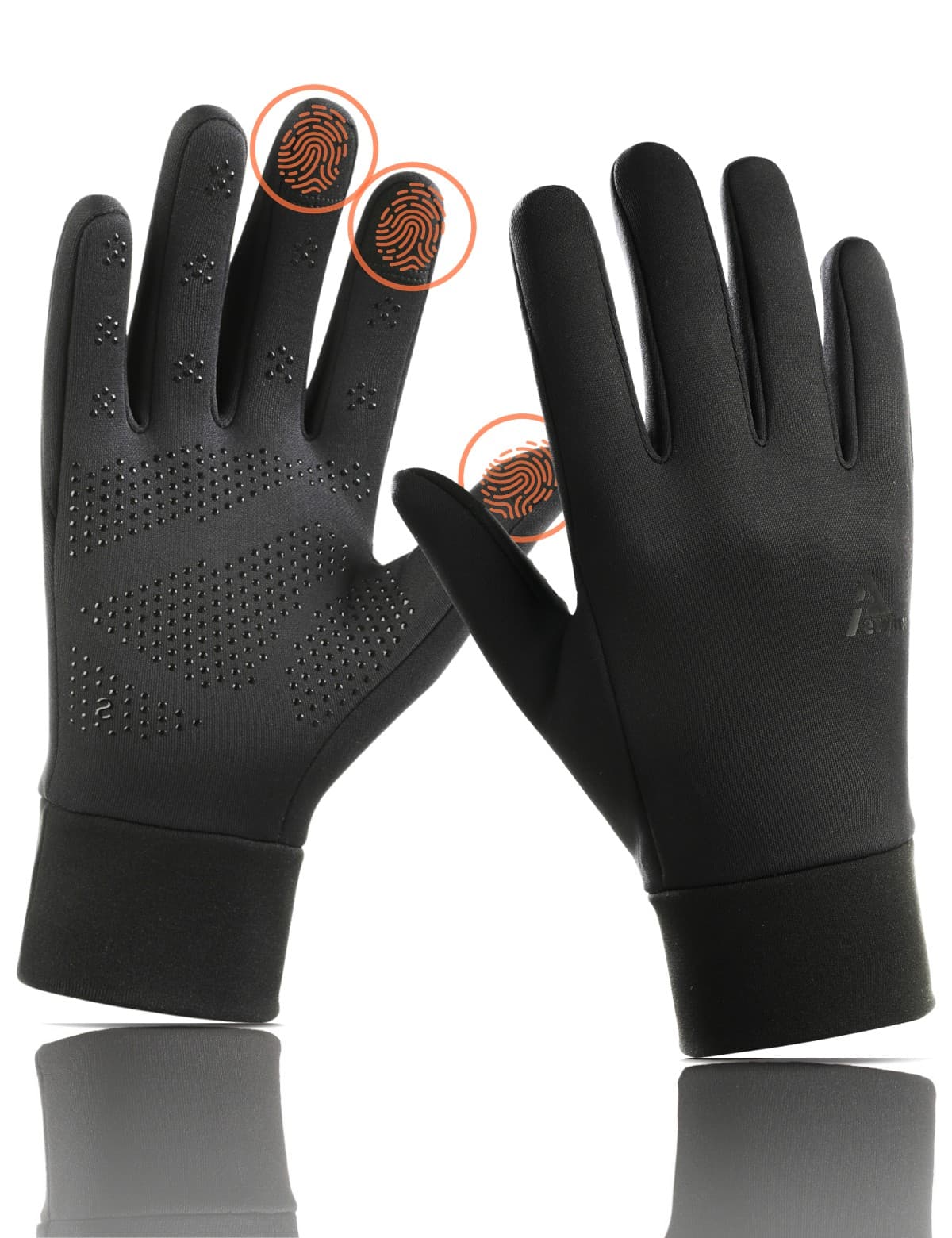
If you already own a roomy weather shell and want a close inner glove for everyday errands, the Aerynx X1 Lite is a candidate to try. Its four-way stretch, 320 gsm fleece, silicone palm grip, extended stretch cuff and touchscreen thumb, index and middle fingertips give it clear inner-layer jobs. That combination is not a universal fit: put the X1 inside your actual shell, check the finger channels and confirm that the cuffs do not stack into a hard band.
X1 is water-repellent, not waterproof. Aerynx's 41–59°F (5–15°C) solo-use guidance is brand guidance, not a tested safety rating; wind, wet, pace and time outside can change the experience. For heavier weather, keep the appropriate shell in the system and use the fit checks above rather than stretching the X1 beyond its role.
Questions about layering gloves
Layering gloves
- Does the outer glove need to be a size larger?
- Not automatically. It needs enough room for the inner glove without compressing it or moving your fingertips out of position. Try both pairs with your jacket on and choose the combination that passes grip, pinch and wrist checks.
- Can any thin glove go under a winter shell?
- No. Check finger length, palm bulk, cuff shape and moisture. Some thin liners support touchscreens and some do not, while a shell with a narrow interior may make even a light liner uncomfortable.
- What should I do if the liner gets wet?
- Stop adding insulation, move somewhere protected and change to a dry contact layer if you can. Let the wet pair dry fully before relying on it again; a thicker outer glove cannot remove moisture already next to your skin.