The short answer
Your usual neighborhood loop can feel different when a 5:30 p.m. return happens in darkness. A dog leash is harder to see, a phone screen steals your attention from the pavement, and a glove that felt fine in daylight may make a small light or zipper awkward. The solution is not a magical reflective glove. It is a small system: light the route, make your body easier to notice, choose a route and pace you can manage, and use gloves that let you stop and handle ordinary tasks safely.
Treat hand details as one supporting part of that system. A reflective patch can respond when headlights reach it; it does not illuminate the path, replace a front or rear light, or guarantee that a driver sees you. Check the return time before leaving, then match the hand protection to whether you are walking, running, walking a dog or riding a bicycle.
Plan the darker part of the route before you leave
Winter planning starts with the time you expect to finish, not the time you step out. A familiar route may include an unlit shortcut, a shaded crossing or a section where wet pavement reflects headlights into your eyes. Decide in advance where you can slow down, stop, cross and turn back. If the weather changes the footing or your gloves become wet, a shorter route is a useful adjustment, not a failure.
- Check whether dusk or darkness will cover any part of the return. Carry the light you need for the whole route, not only the first few minutes.
- Choose sidewalks, paths and crossings where you can see the surface and where other road users have time to see you. Avoid treating a familiar shortcut as automatically safe in a new light level.
- Wear or carry reflective or retroreflective material where it is visible rather than hidden under a coat, scarf or pack strap.
- Keep the phone accessible but do not read a map while moving. Stop in a visible, stable place before using it, and set a simple turnaround point when weather, light or surface is worse than expected.
The NHTSA pedestrian visibility advice notes that reduced daylight and shadows make it harder to see people in dark or non-reflective clothing. It also separates the jobs of a flashlight and reflective material: one helps light the path and make you more visible, while the other responds to incoming light.
Lighting and reflection do different jobs
Use this distinction when you pack. A small reflective detail on a glove may help a driver notice hand movement when headlights hit it, but it cannot show you a pothole or tell a driver how far away you are. A headlamp or flashlight can help with the ground and can contribute to being seen, but it is not a substitute for reflective material on the parts of your body that move through the scene.
| Question | Useful preparation | Limit |
|---|---|---|
| Can I see the path? | A suitable flashlight or headlamp, plus a route with a stable surface | A light does not remove traffic, weather or surface hazards. Keep your eyes on the route while moving. |
| Can other people see me? | Reflective or retroreflective material placed where headlights can reach it; visible clothing can add contrast | Bright or white fabric alone does not guarantee night visibility, and a small glove detail is not a full safety system. |
| Can I handle a dog leash, zipper or phone? | A correctly sized glove, a stable place to stop and a short practice task before leaving | Touchscreen compatibility does not make it safe to type while walking or running. |
| Can I ride safely? | Bike-specific front and rear lights, reflectors, visible gear and hands that can control the bars | A reflective glove cannot replace the bicycle equipment or road behavior required for riding. |
For running, REI's clothing guidance includes reflective accents for dark or low-light runs. Read that as a clothing-preparation principle, not as a distance claim for any particular mark or glove.
Test the glove with the things you use after dark
Low light makes small failures more expensive. If a fingertip is too long, a cuff catches on the sleeve or the palm slips on a leash handle, you may be tempted to remove the glove at the worst moment. Do a short indoor test with the actual phone, light, coat and leash before you leave.
- Turn a light on and off while wearing both gloves. If the switch or button is small, practice the exact pinch or press rather than assuming a touchscreen fingertip will manage it.
- Open your phone, wake the screen and dismiss a notification. Then clean and dry the screen and repeat. Touchscreen claims can vary with the device, protector, moisture and fit.
- Hold the dog leash in the grip you use outdoors, but do not wrap a leash around your fingers or wrist. The winter dog-walking glove guide covers grip and safer handling in more detail.
- Put the coat sleeve over or under the cuff and lift your arms. Make sure the overlap stays comfortable and does not hide the only reflective detail you planned to use.
- Practice stopping before opening a map. For cycling, pull fully off the travel line and follow the NHTSA bicycle safety guidance on lights, reflectors and keeping both hands on the handlebars except when signaling.
Walking, running, dog walking and cycling are not the same
The hand problem changes with the activity. A walker may need to hold a phone, keys or a rail while moving at a moderate pace. A runner may create more body heat but have less patience for a bulky cuff. A dog walker may stop often, hold a leash and open a waste bag. A cyclist has a control and lighting system that must stay usable, with cold wind reaching the hands faster than on a sheltered walk.
- For a neighborhood walk or run, prioritize a clear path, a light, visible outer layers and a glove that lets you handle keys without exposing your hands for long. Check the wind and return time, and use reflective accents on more than one part of your outfit when possible.
- For dog walking, keep the light accessible, keep the leash handling simple and stop somewhere stable before using a phone or opening a bag. The glove should support the task without encouraging a tighter grip than necessary.
- For cycling, use the bicycle's required lights and reflectors, check that the gloves do not interfere with braking or shifting, and plan the map before moving. The winter cycling guide covers wind and handlebar fit separately.
If wet weather is likely, check whether glove protection matches the exposure. Carry a dry option or shorten the outing when your hands stop working comfortably.
Choose hand protection as part of the whole setup
A glove should answer a hand question, not carry the whole visibility plan. Check the touchscreen troubleshooting guide if phone operation matters, and use glove sizing with the actual device and sleeve you will wear. If the right answer is a mitten, a brighter jacket or a shorter route, make that change rather than forcing a five-finger glove to become a safety device.
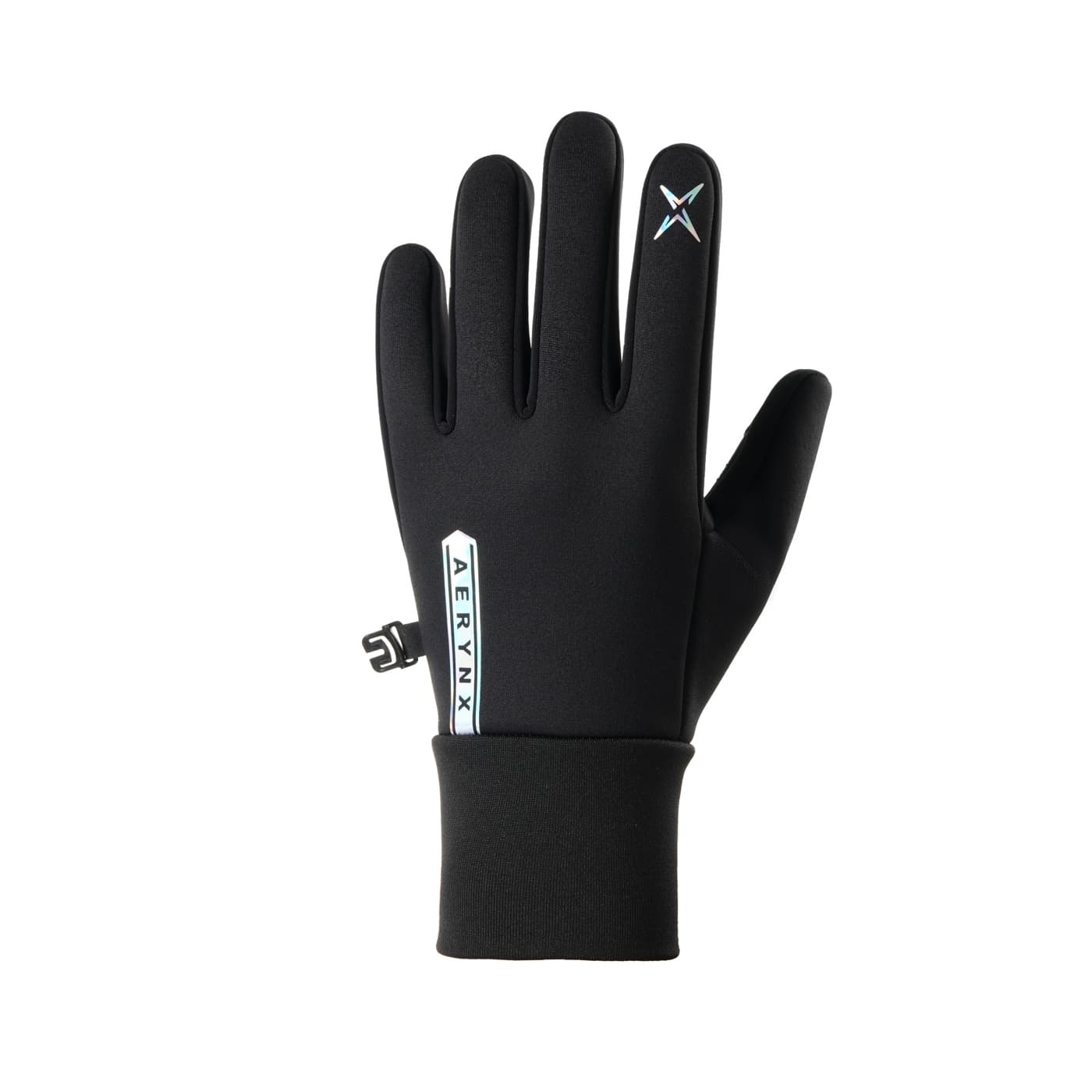
For the Aerynx X2 Daily 2026 design, listed details include a reflective back-of-hand detail, three-finger touchscreen, silicone palm grip, extended cuff and a waterproof soft-touch shell with a wind-blocking middle layer. Those features can support a wet, phone-and-grip-oriented walk, but the reflective detail is not a lamp, measured visibility distance, certification or substitute for proper clothing and lights. This describes the 2026 design; confirm the current page version before ordering. It is for wet-weather wear, not soaking or submersion; water can enter at seams or the cuff, and 32–50°F (0–10°C) solo use is brand guidance, not a safety rating.
After-dark winter walking questions
Visibility and gloves
- Do bright gloves count as reflective gear at night?
- Not automatically. Bright or white fabric can add contrast in some conditions, but NHTSA says white clothing does not guarantee that drivers see a person at night. Look for actual reflective or retroreflective material and use appropriate lighting.
- Can a reflective glove replace a headlamp or bike light?
- No. A reflective detail can supplement the outfit, but it does not light the path. Walkers may need a flashlight or headlamp, and cyclists need the appropriate front and rear lights, reflectors and road behavior.
- Can I check a map while cycling if my gloves work on a touchscreen?
- Do not check it while riding. Pull completely out of the travel line, stop in a stable visible place, then use the phone. Touchscreen compatibility changes the hand task, not the need to control the bicycle and watch the road.