The short answer
Forty minutes into building a snow fort, your kid swears they're fine. Then you peel back a glove and find a soaked lining, a cuff packed with snow and fingers that are bright red and stiff.
Don't wait for a child to say they're cold. Plan quick check-ins at natural pauses, such as arriving, switching games, a snack or warm-up break and heading home, and at each one look inside the gloves and at the hands. Swap to a dry pair when the lining is damp. Stop play and go inside when you see warning signs such as numbness, skin turning white or grayish, or pain. No glove, however weather-protective, replaces those checks.
Why "I'm not cold" isn't a reliable signal
Because their bodies are smaller, children lose heat more quickly, and the American Academy of Pediatrics notes that kids who are having fun may be less likely to come inside when they're getting too cold (AAP guidance on playing outside in winter). The gear adds its own delay: a lining can soak through from snow packed into the cuff or from squeezing wet snowballs well before a child mentions it.
That isn't a reason to keep kids indoors. It's a reason for the adult to own the check instead of waiting for a complaint. Give your child a few words they can call out mid-game, such as wet, sore, numb or can't grip, and agree that any one of them means a quick stop with no argument.
Build glove checks into the game
Checks stick better when they're part of the routine rather than a punishment. One approach is a glove pit stop every time the game changes: hands out, gloves off for a few seconds, a quick look and feel, gloves back on.
| When | What to check | What to do |
|---|---|---|
| Before you head out | Gloves are dry inside; cuffs still cover the wrist when arms go up; spare pair packed; nearest warm place known | Fix wrist gaps before snow gets in, and check the forecast for wind |
| Switching games | Snow inside the cuffs; lining at the fingertips and palm | Knock snow out of the cuffs; swap gloves if the lining is damp |
| After snowballs or fort building | Palms and fingertips, where squeezing wet snow pushes water in | Expect wet gloves sooner and swap earlier |
| Warm-up break indoors | Hand color, feeling and whether your child can grip | Warm drink, dry gloves, then decide whether to go back out |
| Heading home | Which gloves are wet | Bag them separately and open them up to dry at home |
Breaks matter as much as checks. The AAP recommends setting reasonable limits on outdoor play time and making sure kids have a place for regular indoor breaks to warm up, and the Canadian Paediatric Society suggests regular breaks inside with a warm drink for younger children (Canadian Paediatric Society winter safety advice). The AAP also advises that, in general, playing outside in temperatures or wind chills below -15°F (-26°C) should be avoided. Treat that as an outer limit, not proof that anything milder is fine: wet gloves and wind can make a milder day uncomfortable quickly.
Check the lining, not just the outside
A glove can look dry on the outside and still be wet against the skin. Fold the cuff back and feel the lining at the fingertips and palm, and look for snow packed between the glove and the coat sleeve. Water can come in from outside through seams and openings, arrive as snow pushed into the cuff, or come from an active child's own sweat. Our guide to why gloves get wet inside in snow sorts out which is which; for snow play, the practical answer is the same either way: a damp lining means it's time to swap.
When to swap gloves and when to end the session
Separate two questions: is the gear wet, and is your child's body telling you something? Wet gear is usually a swap. Body warning signs mean stop.
These are exit signals, not a diagnosis. If you're unsure which box you're in, go inside and warm up; the snow will still be there after lunch. You can read the CDC's full list of frostbite warning signs and first steps before the season starts, so you aren't looking them up in the cold.
Gloves, mittens and spares: pack for the kid you have
Mittens keep fingers together, which is why the Canadian Paediatric Society suggests them for warmth. Five-finger gloves help when a child wants to grip a sled rope, shape snow or manage a zipper, but only if they can put them on without a struggle; our school glove guide has a simple try-on for that. Whichever you choose, pack for the day you're likely to have:
- At least one dry spare pair per child, sealed in its own bag so it stays dry.
- An empty bag for wet gloves, so they don't soak everything else.
- Gloves of your own that let you work zippers, cuffs and clips for your child without going bare-handed for long.
- A known warm place nearby, whether that's the house, the car or a warming hut.
- An adult within sight. The Canadian Paediatric Society says younger children shouldn't play outside alone and that snow forts and tunnels should always be supervised.
At home, change out of wet clothes right away, as both pediatric groups advise, and let the gloves dry fully before the next outing; see drying winter gloves inside.
Where a kids' waterproof glove helps, and where it doesn't
A glove with a membrane, a long cuff and a grippy palm can mean fewer swaps; it doesn't make the check-ins optional. Look for those features plus clear care instructions and stated limits.
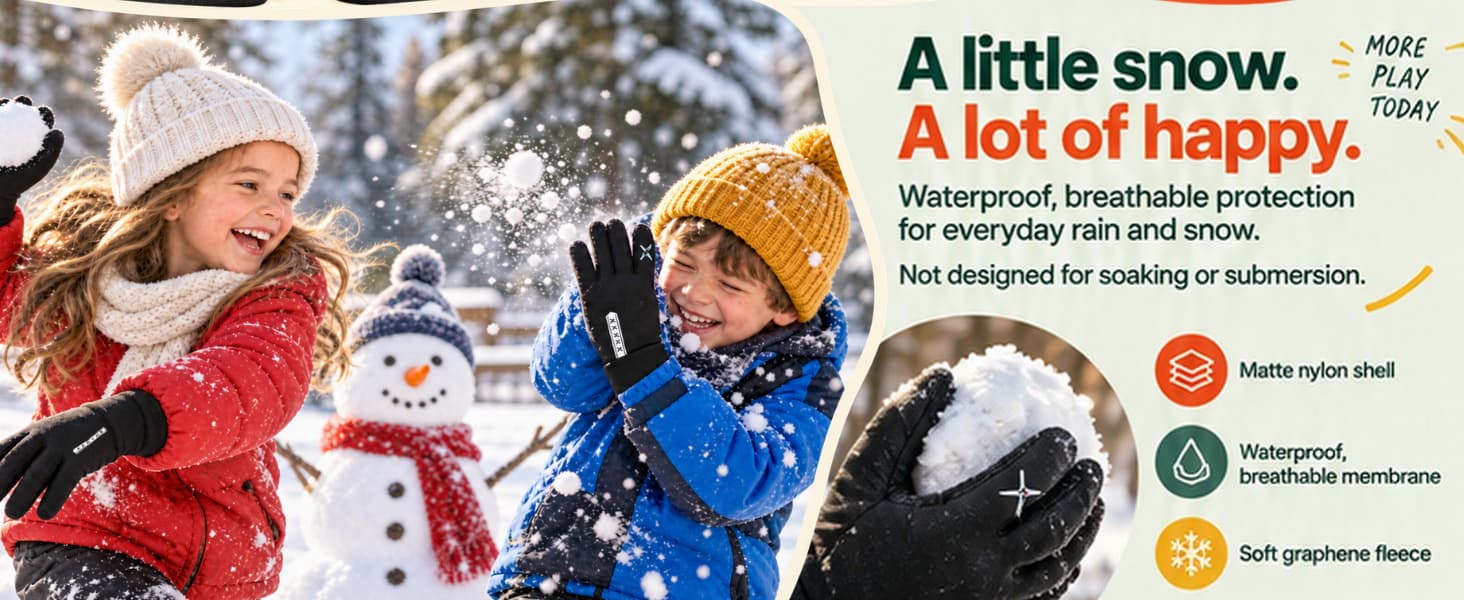
Our Aerynx X0 Kids glove pairs a nylon shell and membrane with a graphene-fiber fleece lining. The long cuff is designed to overlap coat sleeves when arms go up, silicone grip dots on the palm help with sled ropes and snowballs, and a pairing clip keeps each pair together in the bag.
Its limits matter more in snow than anywhere else. X0 is not made for soaking: squeezing wet snow, kneeling in slush and snow packed into the cuff can all push water in, and seams can let water through. It has no published temperature rating and won't prevent frostbite, so the check-ins and breaks above still apply. We haven't published a verified hand-size chart or age table, so measure your child's hand, check the size guidance on the product page and contact support if you're unsure, and don't assume a kids' glove fits a toddler. If your child can't manage five fingers yet, mittens are the better snow-day choice.
Snow play questions
Snow play questions
- How long can kids play in the snow?
- There's no single safe number; it depends on temperature, wind, clothing and the child. The AAP recommends reasonable limits with regular indoor breaks and advises avoiding outdoor play below -15°F (-26°C) temperature or wind chill. Within that, let dry gloves and normal-feeling hands decide, not the clock.
- Do waterproof gloves still need a spare pair?
- Yes. Everyday waterproof wording describes wet-weather use, not automatic immersion suitability. Snow in the cuffs, pressure from wet snow and sweat can still wet a lining from the inside. For actual immersion or standing water, use gear whose manufacturer confirms it for that task; a dry spare is still useful for ordinary snow play.
- My child says they're not cold. Is that enough?
- No. The AAP notes that kids having fun may be less likely to come in when they're getting too cold. Look inside the gloves and at their hands at each pause, and go inside if you see numbness, pale or grayish skin, or pain.