The short answer
You pull on a pair of thick winter gloves, spread your hands, and they feel fine. Then you wrap one hand around a coffee cup or hook a grocery bag over your fingers, and the glove starts to argue: fabric bunches in the palm, the backs of your fingers pull tight, and you squeeze harder than the job needs.
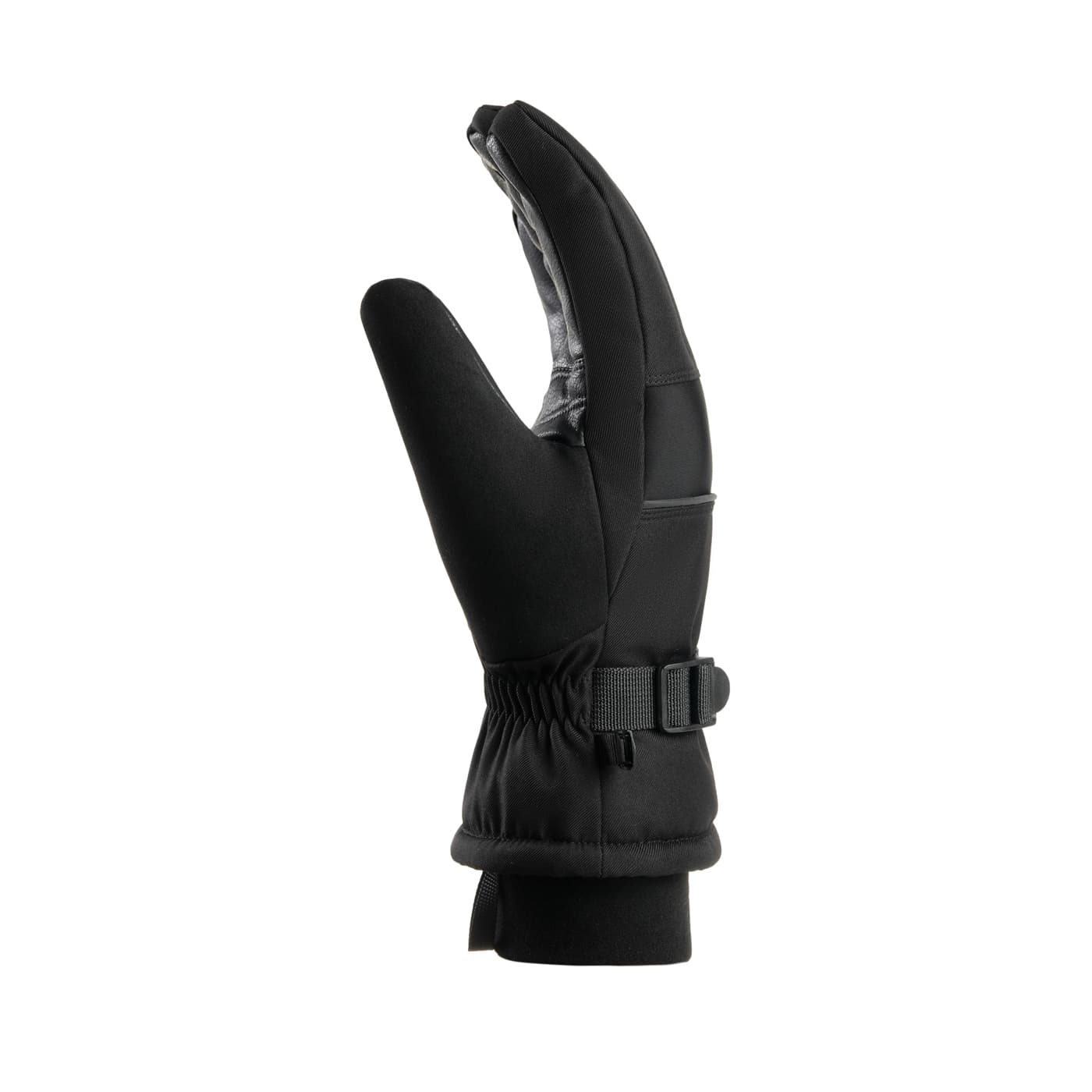
Pre-curved fingers are a pattern choice aimed at that moment. Instead of cutting each finger as a straight tube, the glove is shaped toward a natural grip, so it already rests slightly bent. The benefit is a glove that may feel less like it is resisting you when you hold everyday things. It is not a promise of more strength or less fatigue, and it cannot rescue the wrong size. The reliable test is to hold your own cup, bag handle, or leash while wearing it.
Why a glove that fits flat can fight you when you grip
Most people check gloves with an open hand, but your hand spends much of a winter day partly closed. When your fingers curl, the back of each finger stretches over the knuckles while the palm side folds in. A glove built around a flat hand has to absorb that change somewhere: as tension across the finger backs, a fold of material in the palm, or fingertips pulling back from the ends. Thick, layered insulation makes this easier to feel than a thin stretch liner does, because there is more material that has to bend.
Hand measurements back this up. A 3D scanning study of finger segment lengths in different hand postures measured 30 people's hands splayed and while gripping, on both the back and palm sides. Finger length changed with posture, and the segments did not change in proportion to each other. Checking the results with 10 more people in a ready-made sports glove, the researchers noted that badly proportioned finger regions caused shifting and discomfort. The study was about glove patterns in general; it did not test any winter glove, including ours.
What pre-curved fingers change, and what they don't
A pre-curved glove is sewn so the fingers rest in a gentle curl, closer to a relaxed hand holding something. The aim is that when you close your hand, less of the pattern has to be forced into a new shape, so there is less fabric folding in the palm and less pull across the finger backs. That is a design intention you can check with your own hands, not a measured result that applies to everyone.
It helps to be clear about what the shape does not do:
- It does not make an insulated glove thin. Pinching a zipper pull is still harder than bare-handed.
- It does not fix finger length. If the glove's fingers are longer than yours, the bend lands in the wrong place.
- It does not add grip strength. A palm that holds onto a leash or pole is a separate feature.
- It does not replace a fit check. People who wear the same size can have very different finger proportions.
Fit matters as much as shape. In a case study of sports glove fit and hand performance, 30 women aged 20 to 29 tried two ready-to-wear sports gloves. Compared with bare hands, the gloves reduced finger range of motion, fingertip sensitivity, grip strength, and handling of small pegs and marbles. Finger-length fit was linked to grip force, and circumference fit affected small-object handling. Two gloves and a small group say nothing precise about any winter glove, but the reminder holds: a smart pattern in the wrong size is still the wrong glove.
Cup, leash, zipper: which kind of grip are you testing?
A glove can be comfortable for one grip and awkward for another. Use this table to decide what to test.
| Task | How your hand is working | What to check while wearing the glove |
|---|---|---|
| Holding a coffee cup or bottle | Wide wrap, fingers curled around a cylinder | Does material bunch in the palm? Do your fingertips stay at the ends of the glove? |
| Carrying grocery bag handles | Fingers hooked, weight hanging from the middle joints | Is there a pressure line across the finger backs after a minute? |
| Holding a dog leash handle | Closed fist around a loop or handle | Can you keep a secure hold without squeezing hard? Does the palm material slip? |
| Shoveling or using trekking poles | Firm grip held for longer stretches | Does the palm stay put, and does the cuff tug when your wrist bends? |
| Zipper pulls, keys, buttons | Fingertip pinch | Can you feel and catch the small part? Expect this to be the hardest task in any insulated glove. |
| Unlocking or tapping a phone | Single fingertip press | Do the touchscreen fingertips reach the glass with a relaxed hand? |
If your winter days are mostly the first four rows, a pre-curved glove is worth a look. If they are mostly the last two, fingertip bulk and touchscreen placement matter more than the curve. For phone trouble in particular, see why touchscreen gloves stop working and how to fix it.
How to test pre-curved gloves in about a minute
You need the objects you actually hold in winter and a minute of attention. Do this with both gloves on.
- Let your hands hang relaxed for a few seconds. A pre-curved glove should settle into a light curl on its own.
- Hold a mug, travel cup, or water bottle for about 30 seconds. Notice whether material folds into the palm or the finger backs feel stretched tight.
- Hook a bag handle or leash loop over your fingers as you would while walking. Are you squeezing harder than you would bare-handed?
- Open your hand fully and spread your fingers. A slight resting curve is normal; having to push against the glove to straighten is not.
- Try one small task, such as a zipper, key, or button. This shows the glove's limit, not whether the curve works.
- Check the fingertips. REI's glove and mitten fitting advice suggests leaving about 1/4 in (6 mm) between fingertip and glove tip. A noticeably bigger gap usually means the fingers are too long, which puts the curve in the wrong spot. The glove sizing guide explains how to check size, and how snug winter gloves should be covers tight versus loose in more detail.
- Repeat the cup and bag steps with the gloves you already own. The comparison tells you more than a single impression.
What are the real benefits of pre-curved gloves?
The honest benefit is comfort in the posture you use most. When a glove's resting shape is closer to a gripping hand, holding things can feel more natural, with less spare material in the palm. If you spend winter carrying bags, holding a leash, or gripping a shovel, that is a practical reason to prefer the design.
What the research above does not show is a specific gain for any product. Aerynx has not published a test showing that pre-curved fingers reduce hand fatigue or increase grip strength, and we do not claim they do. A fair comparison would need two gloves matched in size, thickness, palm, and insulation, differing only in finger shape. Without that, it is easy to credit the curve for a difference that really comes from padding, fit, or a grippier palm.
Pre-curving is also not the answer to every cold-hands problem. If you mostly stand still and rarely need individual fingers, a mitten will usually keep your hands warmer; our guide to gloves vs mittens for everyday winter tasks walks through that choice. If your main job is walking a dog that pulls, how you hold the leash matters more than glove shape, and our guide to winter gloves for dog walking covers that.
Choosing a winter glove for warmth and everyday grip
If you want insulation and a natural-feeling hold in one glove, look at four details together: finger shape, finger length, palm material, and cuff. A curve only helps when the finger length suits you, a palm that bunches or slips undoes it, and a cuff that tugs when you bend your wrist gets old on a long walk.
In our lineup, pre-curved fingers are a feature of the Aerynx X3 Winter. It pairs that shape with a padded microfiber PU synthetic-leather palm for holding a dog leash, trekking poles, or a shovel handle, a six-layer construction for colder everyday outings, touchscreen fingertips on all ten fingers, a thumb wipe panel, and a long cuff with a wrist adjuster. The palm is synthetic, not genuine leather. X3 has no published temperature rating, so judge it against your own conditions, wind, and activity level, and treat it as an everyday winter glove rather than a certified ski, work, or cut-resistant glove. It is not made for soaking, and water can still find its way in at the seams.
Before you settle on a pair, run the one-minute test above with your own cup and bag. If the curve feels natural, each finger sits properly in its compartment with modest clearance, and you can grip comfortably without pinch or compression, the shape is doing its job for your hand.
Questions about pre-curved gloves
Pre-curved glove fingers
- Will pre-curved gloves make it hard to straighten my fingers?
- They should not. The glove rests in a slight curl, but you should be able to open and spread your hand without pushing against the material. If straightening feels like a struggle, try a different size or model.
- Do all five-finger winter gloves have pre-curved fingers?
- No. Many are cut with straighter fingers. Product descriptions usually mention pre-curved or pre-shaped fingers when the pattern has them, and a side view of the glove often shows a visible bend.
- Is a pre-curved glove the same as sizing up for more room?
- No. Sizing up adds length and width, which can leave empty space at the fingertips and put the bend in the wrong place. A pre-curved glove in your correct size keeps the curve lined up with your knuckles.